
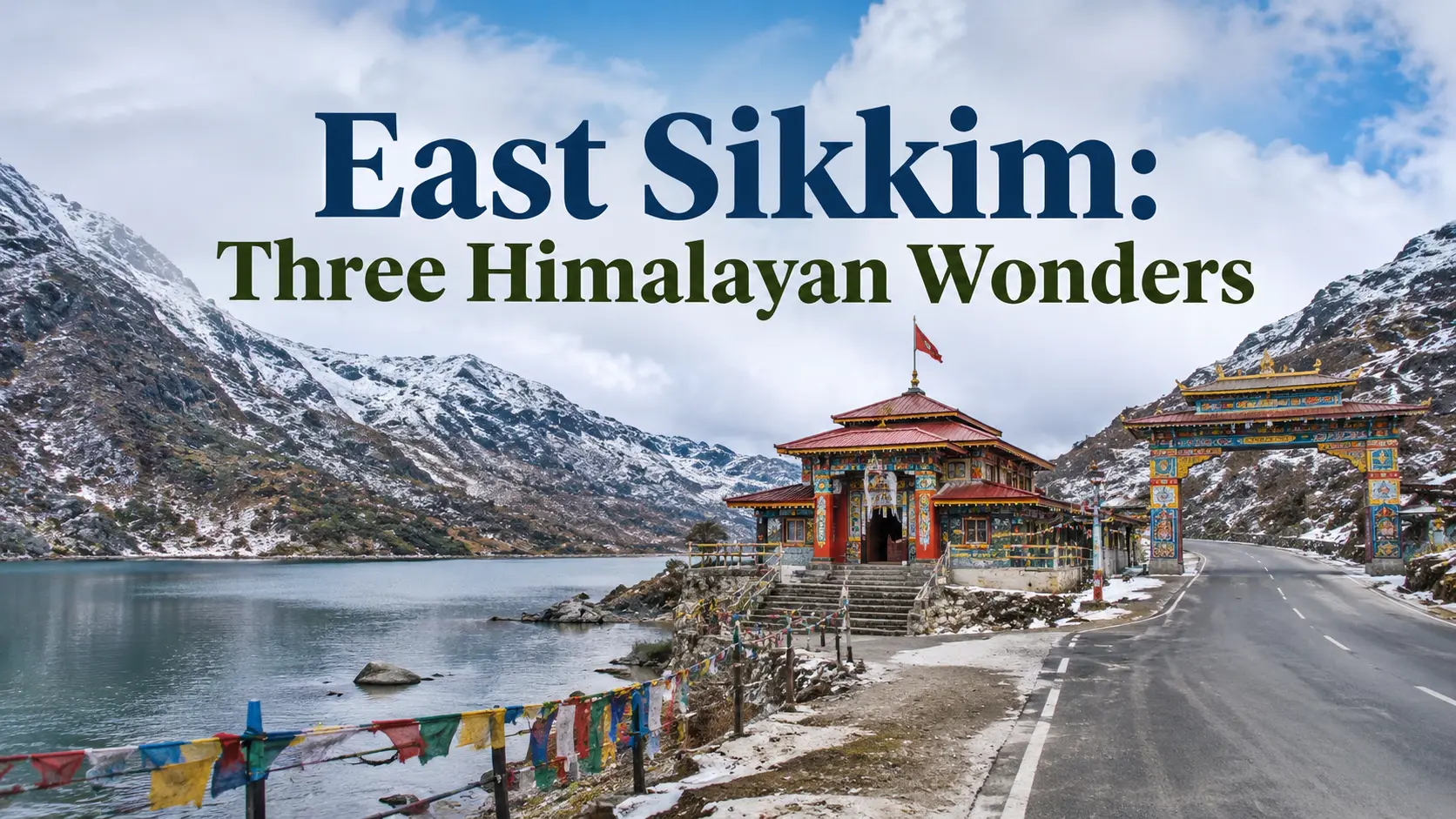
By picovoyage · Reviewed 2026-11-06 by Picovoyage
Why Does Tsomgo Lake Sikkim Look Different in Every Season?
Spring: The ice melts, and rhododendrons bloom on the slopes in vibrant pink and red.
Monsoon: The soft mist hangs over the lake, so the vista keeps appearing and vanishing.
What Makes Changu Lake Gangtok Sacred to Local Communities?
Who Was the Soldier Behind Baba Mandir Gangtok, and Why Do Travellers Pause Here?
What Can You Feel Inside the Shrine and Memorial Grounds?
The moment you step inside, you are sheltered from the road noise. It’s cold air. Silence all around. The army maintains the shrine in a clean and nice condition. Visitors tend to arrive gingerly, speaking in whispers and offering a quick prayer.
Many also leave a little offers, and some take away a little water as a blessing. The memorial gardens behind the temple are peaceful places to take a break for a few minutes, and this makes it one of the notable tourist spots of East Sikkim.
What Makes the Nathula Pass in Gangtok Unlike Any Other Mountain Pass?
Most mountain passes are just places where one road crosses over to the other side. The Nathula Pass in Gangtok is a whole different ball game. It is located at around 14,000 feet above sea level on the border between India and China and was once part of an ancient trading route with merchants carrying silk, wool, and spices over the mountains. Today, Nathula Pass in Gangtok is one of the few places where you can stand close to an international boundary and feel the history all around you.
Beyond its history, here are some of the things that make this pass so special:
Border fence: It’s a fence that demarcates the border between two countries, but almost no one ever forgets seeing it.
Army presence: Indian soldiers are still standing guard here in freezing winds and snow, day after day.
View of Himalayas: On a clear day, snow-capped peaks all around.
Nathula Pass Altitude: At this altitude, the air is thinner so many people feel a bit sick or breathless.
What Is the Mood at the Border Fence on a Clear Day?
Which East Sikkim Tourist Spots Share the Same Road as Changu Lake?
Scenic roadside viewpoints: Short stops where the valley opens up, and the clouds drift below you.
Small Monasteries: Spiritual havens of peace with fluttering prayer flags and quiet chants in the air.
Is Kyongnosla Alpine Sanctuary Worth a Short Detour?
How Does Local Culture Shape Life Around Changu Lake Sikkim?
Local festivals: Villagers meet for prayers, singing, and communal meals, especially on religious and seasonal events.
Mountain village lifestyle: Life here centers on farming, local enterprises, and tourism, and on facing the cold with kindness and humor.
How Do You Fit the Changu Lake, Baba Mandir and Nathula Pass Circuit Into One Day?
A food break: Pause near the lake for hot momos or tea, so your energy stays up for the higher stretch ahead.
Time at each stop: Normally, it is pleasant to spend one hour at the lake, thirty to forty-five minutes at the shrine, and one hour at the pass.
How Does the Order of Stops Change the Whole Experience?
The itinerary is mapped out, the day is coming together, and one thing is certain: it is time to look back at everything this journey has to offer and understand why the places to visit in East Sikkim deserve a trip of their own.
Are the Places to Visit in East Sikkim Worth a Trip of Their Own?
Frequently Asked Questions
Why is Tsomgo Lake Sikkim also called Changu Lake?
Tsomgo Lake Sikkim and Changu Lake Sikkim are two names for the same lake. Tsomgo comes from the Bhutia language and is often explained as “source of the lake,” while Changu is the name many travellers and locals use today.
How high is Tsomgo Lake in East Sikkim?
The lake sits at around 12,000 feet and is fed by melting snow from the peaks around it. The high altitude is what gives it the frozen winter look and the soft mist in monsoon.
Does Tsomgo Lake freeze every year?
The lake freezes in the colder months and melts as spring arrives. It is not frozen all year, so what you see depends on the season of your visit.
Why is Changu Lake Gangtok considered sacred?
Sikkimese Buddhists and Hindus both hold the lake in deep respect. Old stories say lamas studied the colour of its water to guess the future, and local Jhankris still gather here to pray during Guru Purnima.
Who was Baba Harbhajan Singh, and why is Baba Mandir Gangtok so famous?
He was a soldier of the Indian Army who lost his life in 1968 near the Nathula area. Soldiers and locals believe he still protects the border, and Baba Mandir Gangtok was built in his memory.
Do you need to be religious to visit Baba Mandir?
No. Travellers of all faiths stop here, and most simply come to show respect. Visitors usually walk in quietly, offer a short prayer, and take a few peaceful minutes in the memorial grounds.
What makes Gangtok Nathula Pass different from other mountain passes?
It sits at around 14,000 feet on the India-China border and was once part of an old trade route. Today you can stand close to an international fence, see soldiers on duty, and enjoy wide Himalayan views.
Is it hard to breathe at Nathula Pass?
The air is thinner at this height, so many people feel tired or breathless. Walking slowly, sipping water, and resting when needed usually helps.
Which East Sikkim tourist spots can you visit on the same road as Changu Lake?
Kyongnosla Alpine Sanctuary, scenic roadside viewpoints, and small monasteries all lie along the same route. These East Sikkim places to visit need only a few extra minutes each, so they fit easily into a day trip.
Can you cover Changu Lake, Baba Mandir and Nathula Pass in one day?
Yes, with an early start. A common plan is Tsomgo Lake first, then Baba Mandir, then Nathula Pass, with about one hour at the lake, 30-45 minutes at the shrine, and one hour at the pass.
Related Tour Packages
Sikkim Darjeeling Tour Package – 10 Nights 11 Days
- Hotel Stay
- Sightseeing
- Cab Transfer
- Meals
Sikkim Darjeeling Tour Package – 6 Nights 7 Days
- Hotel Stay
- Sightseeing
- Cab Transfer
- Meals