
By picovoyage · Reviewed 2026-11-11 by Picovoyage
Punakha, Bhutan, is the kind of place that slows you down the minute you arrive. It was the capital of the kingdom till 1955. Now it is renowned as the warmest and greenest valley in Bhutan. It is a serene place with rice fields, quiet villages & two clear rivers. Many travelers describe the valley as being the most beautiful in the country, and it's not hard to understand why.
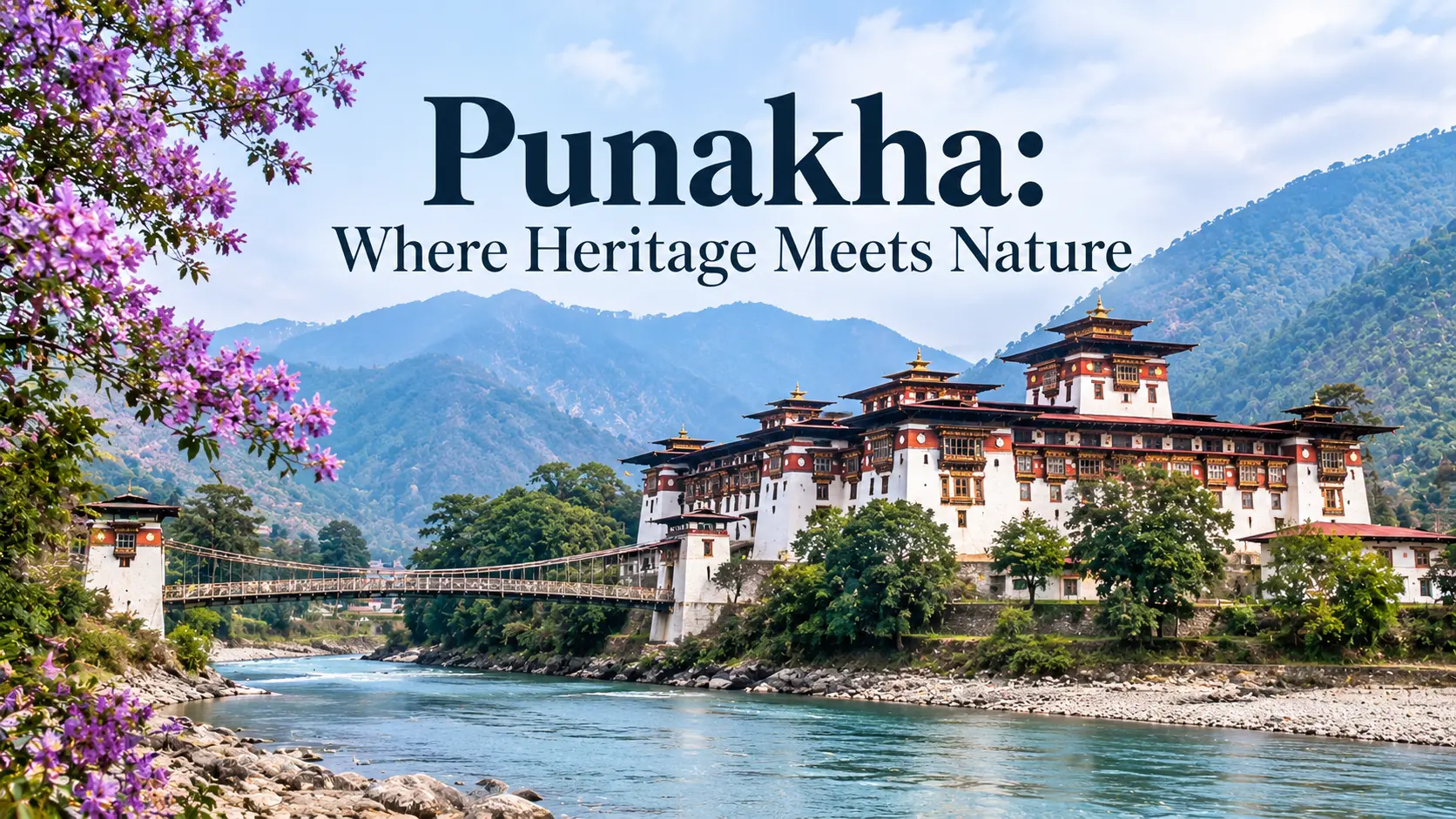
The magnificent Punakha Dzong, erected at the confluence of the Pho Chhu and Mo Chhu rivers, and the long suspension bridge that swings softly above the water are explored in this itinerary. We also offer village walks, river activities, and breathtaking drives that make this region easy to fall in love with. So let’s get started.
What Makes Punakha Dzong So Special?
Punakha Dzong is noteworthy for its peaceful river setting, long royal history, and superb Bhutanese craftsmanship, all in one. Locals nickname it the “Palace of Great Happiness,” and one visit is all it takes to see why. Stand before it, and you will understand why this dzong is the pride of Punakha, Bhutan.
Punakha Dzong History, Architecture and the Meeting of Two Rivers
The dzong sits at the confluence of the Pho Chhu and Mo Chhu rivers, locally known as the father and mother rivers. From afar, the white buildings and golden roofs seem to float on the lake. Punakha Dzong was established in 1637 by Zhabdrung Ngawang Namgyal and served as the center of government until 1955. The first king was crowned here in 1907, and in 2011 the fifth king tied the knot in its courtyard. It is still the winter residence of Bhutan’s central monastic body.
The architecture contributes to the magic. You cross a wooden bridge, then enter spacious courtyards, tall whitewashed walls, and a high central tower. Carved balconies and brightly painted scenes are practically everywhere you look. In April, the jacaranda trees are purple in blossom, and the whole place looks like a postcard. Why do the local guides bring their people here first? The dzong tells you aboutBhutan in one visit. It's faith, its history, and its craft. Request a guide to accompany you inside, dress modestly, and remove your hat and shoes before entering the temple halls.
And crossing the Punakha suspension bridge feels like a long, swaying trek above the Pho Chhu after the peaceful halls of the dzong.
What Is It Like to Walk Across the Punakha Suspension Bridge?
Walking across the suspension bridge in Punakha is like a mini adventure that happens in a few peaceful moments. The bridge is high above the Pho Chhu river, a short walk from Punakha Dzong. It is one of the most adored places in Punakha, Bhutan and for many travelers it is the moment they remember the most. Stand on the planks and the whole valley will open out around you.
Punakha Suspension Bridge Length, Views and Prayer Flags
One of the longest suspension bridges in Bhutan, the Punakha suspension bridge is roughly 160 meters. It is built of steel cables and wooden planks, and it sways gently with each step, each gust of wind. If your heart starts to race a little in the middle, don't worry. The bridge is robust and local families, monks and even cattle pass it every day.
The true prize is the views. On one side, the white walls of Punakha Dzong shine by the river. On the other side, the valley is filled with green hills, rice paddies, and quaint farmhouses.Thousands of colorful prayer flags are strung along the wires as they move noisily in the breeze. Each flag is a prayer carried through the valley by the wind, so you are traveling through a blessing as much as a bridge.
So when's the optimum time to cross? Best to go early in the morning or late in the afternoon when the light is mellow, and the people are thin. Take your time, grab the side wires if you feel like you’re wobbly, and stop halfway to take pictures. If you feel like wandering a little farther, there is a peaceful village route on the far side.
Once you’ve crossed the river and absorbed in the views of the valley, the area around Punakha has so much more to offer, from sacred temples to mountaintop chortens and verdant rice terraces.
Which Other Attractions Add Charm to the Punakha Valley?
The Punakha valley beyond the dzong and bridge is full of subtle, gentle surprises. Sacred temples, chortens on hilltops, and lush rice terraces are all close together, so you may see a lot without rushing. Most are best approached on foot, and here the valley displays its warm, inviting face. Here are some of the Punakha sights that travelers often remember long after the vacation is over.
Chimi Lhakhang, Khamsum Yulley Chorten and Rural Punakha
To really see rural Punakha, you need to walk. Chimi Lhakhang, Khamsum Yulley Chorten, and the villages in between reveal a gentler, calmer side of Bhutan. What to look out for:
Chimi Lhakhang and the trek to it: Built in 1499 and renowned as the fertility temple, it stands on a little hill. It’s a 20- to 30-minute stroll through rice fields and a welcoming village. Couples typically come here for blessings.
Khamsum Yulley Namgyal Chorten and panoramic views: A steady uphill walk through farmland, with wide views over the valley and rivers below, leads up to this tall chorten and its golden top.
Terraced rice fields and the nunnery: The terraces glow bright green in summer and golden in autumn. A tranquil nunnery on the ridge provides a spiritual, quiet touch.
So can you see all of these in a day? Yes, if you start early and take it easy. The trails are easy, the villages are welcoming and your guide can tell you the history behind every temple and chorten you will pass.
You may have seen the temples and the rice fields, but the valley also has a lively side, with river rafting, village life and festival days that go far beyond sightseeing.
What Can You Experience in Punakha Beyond Sightseeing?
Punakha is more than just dzongs and temples. If you are wondering what more you can do in Punakha beyond sightseeing, the answer is simple. Splash through a river, eat a meal in a farmhouse, and join a festival crowd. Here, the valley is really in its element.
River Rafting, Village Walks and the Punakha Festival
Punakha, Bhutan, encourages you to go beyond the famed sights. Here are three ways to do that:
Mo Chhu and Pho Chhu Rafting: The rapids are easy to medium, so that first-timers can enjoy the ride. Guides give a quick briefing, and the lovely hills keep you smiling between splashes.
Farmhouse visits, local food in the valley: Sit beside a wood fire, sip butter tea, and sample ema datshi, Bhutan's favorite chili and cheese dish. The local favorite is the red rice cultivated in the fields of Punakha.
Punakha Drubchen and Tshechu festival days: These usually fall in late winter and bring masked dances, bright costumes, and a lively story of an old battle. Dates are dependent on the lunar calendar, so check them before you plan your trip.
Why do the natives appreciate festival days so much? Because they bring families, old friends, and neighbors together, and strangers are warmly welcomed to watch. A rural walk, a river ride, a festival crowd- they show you the actual beat of the valley.
You will begin to understand why this valley has such a kind and friendly vibe after a day in the village and on the river, and that is why Punakha is known as the warm heart of Bhutan.
Why Is Punakha Called the Warm Heart of Bhutan?
Punakha is known as the “warm heart of Bhutan” in two ways. The environment is warm, and the people are friendly and inviting. The valley is low and sunny, and thus feels softer and kinder than other regions of the Himalayas.
Punakha Valley Climate, Landscapes and Local Life
The first is due to the climate of the Punakha valley. The valley is around 1,200 meters above sea level, much lower than Thimphu or Paro; thus, winters are mild and summers warm. Here, farmers raise rice, chilies, and oranges, while the Pho Chhu and Mo Chhu rivers keep the soil rich and the fields lush. Why do so many travelers spend an additional day? Because the valley slows. You. That laid-back vibe is evident in every Punakha resort, whether it’s Six Senses Punakha, Dhensa Boutique Resort, Punakha Zhingkham Resort, or RKPO Green Resort, many of which overlook rivers and rice fields.
The radiance is enhanced by local life. Farmers wave from their fields, kids play near the bridges, and a guesthouse in Punakha serves you butter tea with a family. Hotel Kingaling, Hotel Lobesa, Hotel Pema Karpo, Hotel River Valley, Hotel Vara, Hotel Zhingkham, and White Dragon Hotel are all nestled in the same hills and farmland. The best hotel in Punakha, Bhutan, is generally the one with the view you enjoy most. All the hotels in Punakha, Bhutan, share the same leisurely, sunny appeal, and that is what the valley is all about.
The warmth of the valley stays in your heart as the journey continues, equally as memorable as the road twists over high passes, woods, and villages on the way to Punakha from Thimphu and Paro.
What Does the Drive Between Thimphu, Paro and Punakha Feel Like?
The drive from Thimphu to Paro and Punakha is like a slow-moving drama. The views from your window are stunning. Prayer flags are fluttering from every hill, surrounded by pine trees and shrouded in foggy ridges. The journey is just as memorable as the destination.Sit back and enjoy the ride.
Thimphu to Punakha via Dochula Pass and the Paro to Punakha Route
Most people drive to Punakha, Bhutan. Each road has its own personality. Here’s what each will contribute:
Thimphu to Punakha: Mountains and 108 chortens at Dochula Pass. The three-hour drive includes a steep climb to the Dochula Pass, at about 3,100 m. Tea here, the 108 white chortens, and far-reaching views of the high Himalayas on a clear day.
Paro to Punakha: valley views and village pauses. This longer trip takes four to five hours, with the road looping past Thimphu and over the same pass. Stop in small villages for food, photos, and a chat with the locals.
Punakha to Paro: the return drive and how it fits an itinerary: Many travelers end their trip in Paro, close to the airport and Tiger’s Nest. After breakfast, leave Punakha and reach Paro by late afternoon.
Is the drive tiring? Well, not so much; the pauses are frequent, and the vistas keep you busy. Pack a light jacket as Dochula may be chilly even in bright months.
After the winding roads, the peaceful passes, and the green valleys, you will understand why Punakha sticks with you for a long time, and that sensation is what the concluding thoughts on this valley are all about.
Punakha, Bhutan: Why This Valley Stays in Your Memory Long After the Trip
It’s the little things that make Punakha, Bhutan linger with you. You recall the white walls of Punakha Dzong between two rivers, the lovely swing of the suspension bridge, the prayer flags overhead. You recall the green rice fields, the smiling faces in the villages, and the long scenic drives from Thimphu to Paro. Together they give this valley the air of a peaceful, happy home in the mountains.
Punakha is viewed differently by each traveler so your holiday should be at your own pace and to your own interests. Pico Voyage can design a Bhutan package to suit your dates, your preferred experiences and your travel style. Contact our staff and we will help you to design a journey that you will never forget.
Frequently Asked Questions
Why is Punakha Dzong famous?
Punakha Dzong is famous for its setting, history and design. It stands where the Pho Chhu and Mo Chhu rivers meet. Zhabdrung Ngawang Namgyal built it in 1637, and it served as the seat of government until 1955. Its white walls, golden roofs and carved balconies make it one of the most beautiful dzongs in Bhutan.
How long is the Punakha suspension bridge?
The Punakha suspension bridge is about 160 metres long, which makes it one of the longest suspension bridges in Bhutan. It hangs above the Pho Chhu river, close to Punakha Dzong. Steel cables and wooden planks hold it up, and it sways gently as you walk.
How much time do you need to see Punakha Dzong and the suspension bridge?
You can visit Punakha Dzong in about one to two hours and cross the suspension bridge in 20 to 30 minutes. Most travellers see both in one half-day, which leaves time for photos, the village path on the far side of the bridge and a slow walk by the river.
What is the best time to visit Punakha Bhutan?
Spring and autumn are the most popular seasons. In spring, the jacaranda trees bloom around the dzong. In autumn, the rice terraces turn golden and the skies are clear. Winters are mild in the valley, and the Punakha Drubchen and Tshechu festivals usually fall in late winter.
Why is Punakha called the warm heart of Bhutan?
Punakha sits at about 1,200 metres, much lower than Thimphu or Paro, so the climate is mild and sunny. The valley’s friendly villages and welcoming people add to the nickname. Both the weather and the warmth of the locals make Punakha feel gentler than other parts of the Himalayas.
Which attractions can you visit in Punakha besides the dzong and bridge?
You can visit Chimi Lhakhang, the fertility temple, and Khamsum Yulley Namgyal Chorten, which has wide hilltop views. You can also walk through terraced rice fields and visit a quiet nunnery. Most of these places are close together, so you can see them in one easy day.
What can you do in Punakha beyond sightseeing?
You can go river rafting on the Mo Chhu and Pho Chhu, visit a farmhouse for butter tea and ema datshi, and take village walks. If you travel during festival season, you can also watch the Punakha Drubchen or Tshechu, with their masked dances and bright costumes.
How long is the drive from Thimphu to Punakha?
The drive from Thimphu to Punakha takes about three hours and crosses Dochula Pass at roughly 3,100 metres. The pass has 108 white chortens and, on clear days, views of the snowy Himalayas. It is one of the best parts of the journey.
How long does it take to travel from Paro to Punakha?
The Paro to Punakha drive takes around four to five hours, because the road passes Thimphu and goes over Dochula Pass. Most travellers stop in small villages for snacks and photos along the way. The return drive from Punakha to Paro takes about the same time.
Can you customise a Punakha trip with Pico Voyage?
Yes. Pico Voyage can build a Bhutan package around your dates, interests and pace, whether you want temples, river rafting, village walks or festival days. Contact the team and share your plans, and they will help you shape the trip.
Related Tour Packages
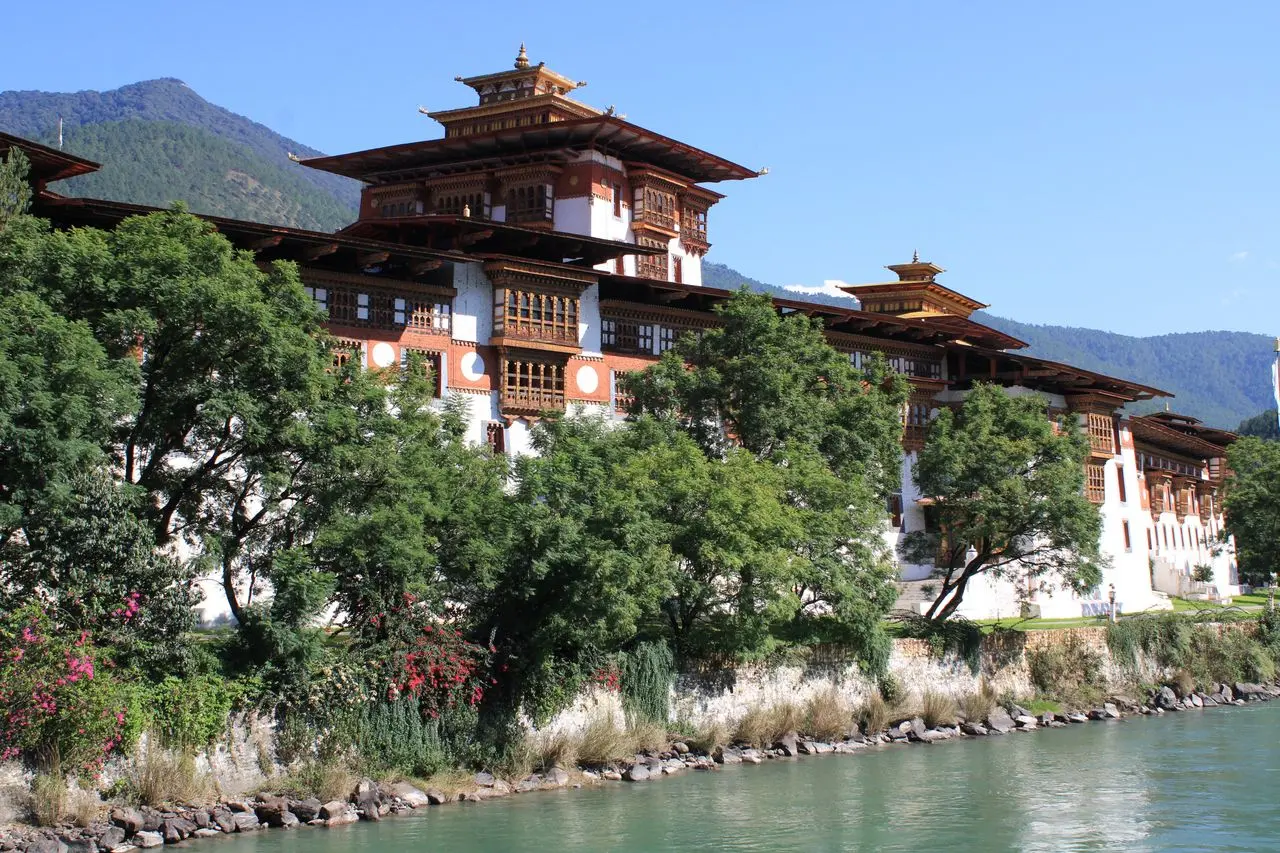
Bhutan Tour Package – 6 Nights 7 Days
- Hotel Stay
- Sightseeing
- Cab Transfer
- Meals
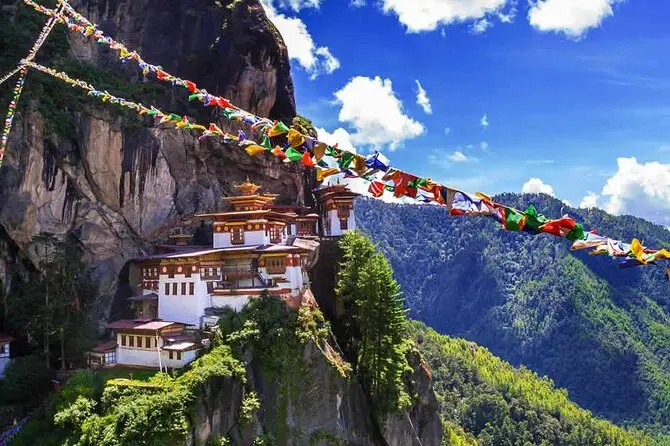
Bhutan Tour Package – 7 Nights 8 Days
- Hotel Stay
- Sightseeing
- Cab Transfer
- Meals