
By picovoyage · Reviewed 2026-10-26 by Picovoyage
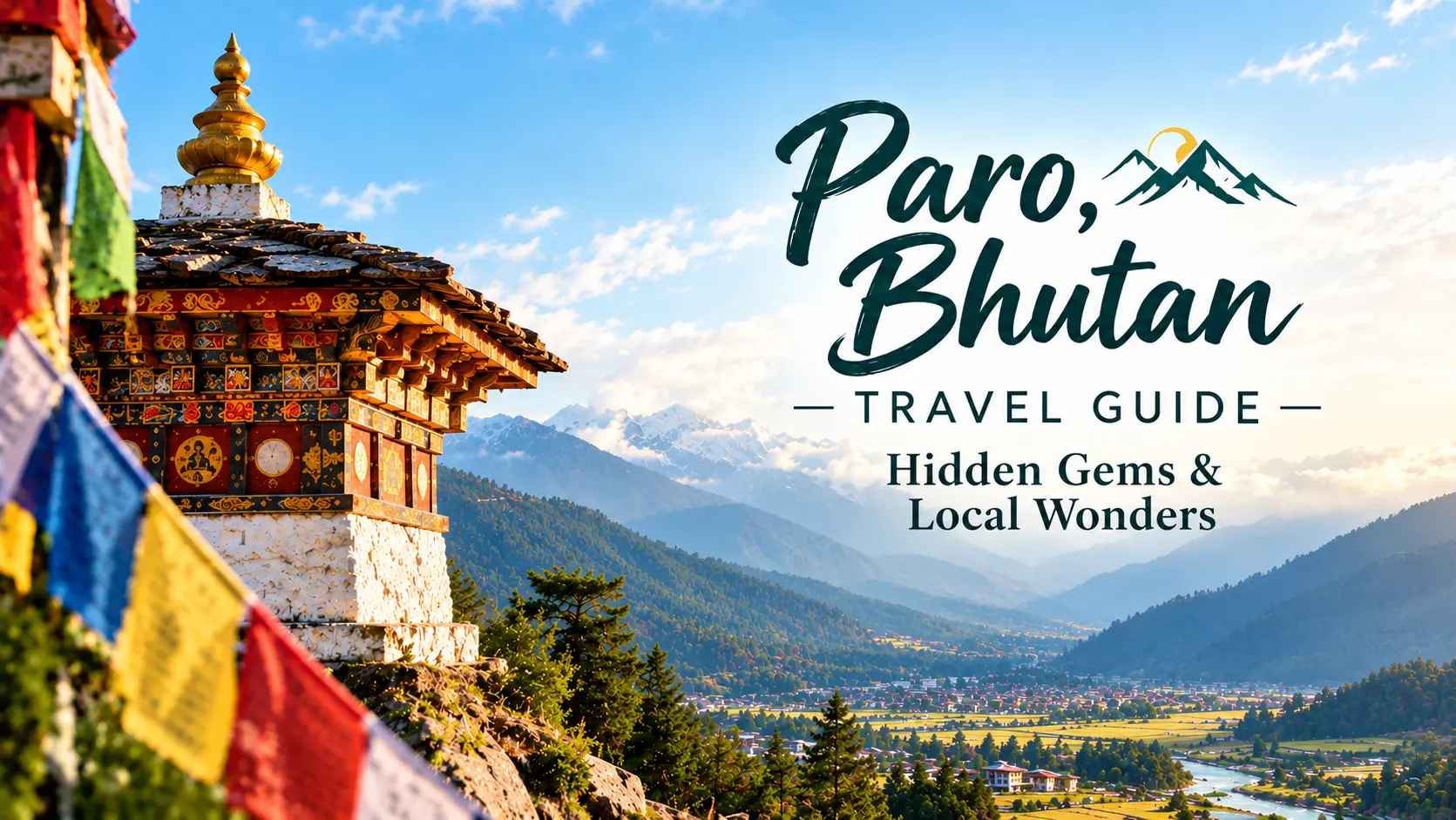
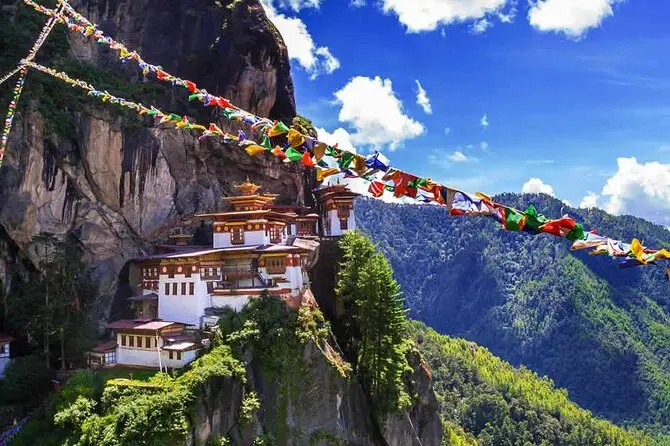
The first thing you notice about Paro Bhutan is how near everything is. Your plane wanders between pine-covered slopes and lands in a tiny valley. In minutes you are breathing thin, clear mountain air, prayer flags snapping in the wind on practically every hill. Rice terraces tumble down to a glacier river, farmhouses display painted blessings on their walls and, high above, a monastery is attached to a cliff face.
That monastery is Paro Taktsang, the famous Tiger’s Nest, and it lives up to the hype. But it is just one chapter in the Paro narrative. The valley also hides the village alleys, the old temples where the residents still light butter lamps every morning, and the riverfront routes for slow cycling and gentle walking.
In this guide, you’ll find the great landmarks, hidden attractions, excellent cycling and walking routes, a taste of local culture and food, honest advice on where to stay, and practical ideas to keep your trip seamless. Let's start with why Paro deserves more of your attention than most travelers give it.
Why Is Paro, Bhutan the Best Place to Start Your Trip?
Most travelers fly into Paro, Bhutan, grab dinner, and head off to Thimphu the next morning. That’s incorrect. Paro is the greatest site to start a vacation, as everything nice is close together, and the valley rewards those who give it two to three days rather than one night. Bhutan tourism is booming, but Paro feels peaceful, local, and serene.
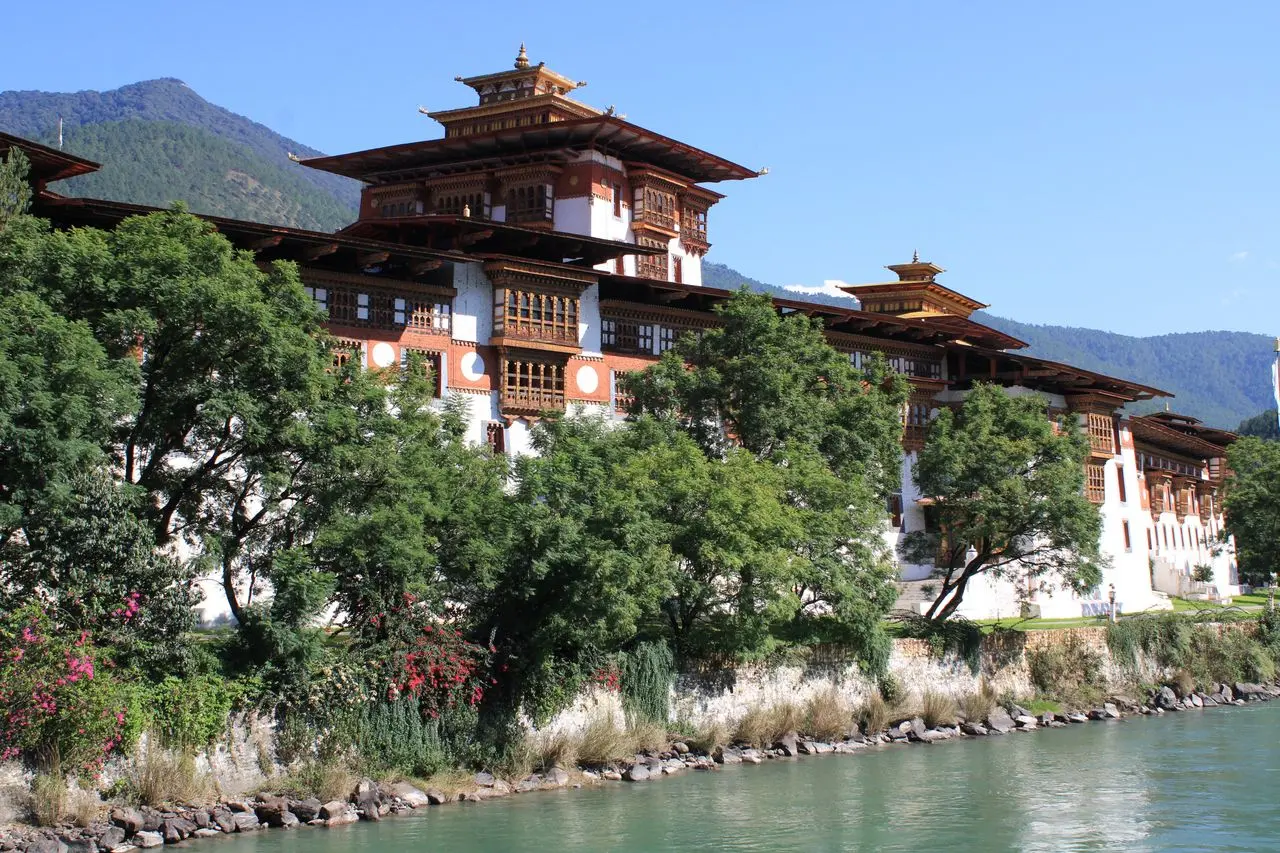
History is a huge part of the draw. Kyichu Lhakhang is a seventh-century temple, one of the oldest in the country, while Rinpung Dzong has watched over the valley for generations. How do you decide which things to do in Paro Bhutan when time is short? Begin with these three:
- Paro Taktsang, the cliffside monastery everyone talks about.
- Rinpung Dzong and the old wooden bridge beside it.
- A slow walk or cycle through the paddy fields.
When Is the Best Time to Visit Paro?
Paro International Airport is the main arrival point for Bhutan. Check the latest visa rules before you fly so you’ll probably enter the valley before anywhere else. The ideal time to visit Paro depends on your mood. Spring (March-May): Rhododendrons are in flower, and this is festival season. From September to November, autumn brings you crisp air and the best mountain views. If you can take the cold or rain, winter and monsoon are quieter times, with fewer people on the trails. Not just the weather but the season should fit the trip you seek.
No matter what season you decide to come, there is one climb to do. So let’s see if the journey up to the Tiger’s Nest lives up to its famous reputation.
Paro Taktsang (Tiger’s Nest): Is the Hike Worth It?
Paro Taktsang is perched on a granite cliff some 900 meters above the valley floor, and has a tale behind it as spectacular as the vista. Tradition has it that Guru Rinpoche flew here on the back of a tigress in the ninth century and pondered for three months in a cave.
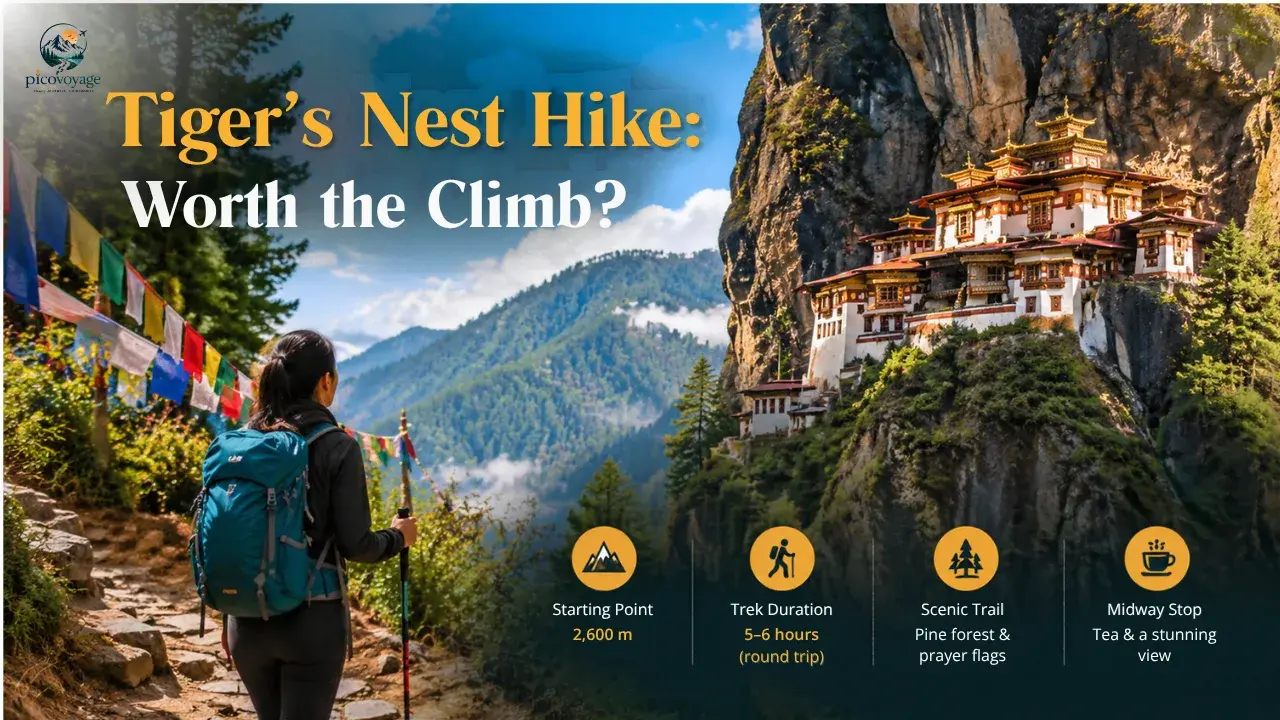
The trek begins at roughly 2,600 meters, climbing through pine forest marked with prayer flags. Plan on a five to six-hour round journey. About halfway up, a tiny cafeteria provides the first nice view of the monastery across the canyon and is a good stop for tea.
So is the climb to Tiger’s Nest worth it?
Most travelers who make it say yes, and not only for the photos. The monastery of Paro Taktsang in Bhutan stays with you long after the trip: the way the monastery slowly appears through the woods, the silence on the route, the sense of arrival on your own feet. Families, older pilgrims, and first-time hikers do it every day by walking gently and resting often.
How Do You Prepare for the Tiger’s Nest Climb?
These Paro Taktsang trek tips simplify the day:
- In grip shoes starting at 7 or 8 AM - with water and a light jacket.
- Cameras, phones, and luggage must be left in the lockers; none are allowed inside.
- Respect the monks; cover your shoulders and knees.
Paro Taktsang might be the star attraction, but the best secrets of the valley are hidden away from the beaten path, in crumbling fortresses, painted temples and village roads that most people never think to explore.
What Are the Hidden Gems in Paro Bhutan?
Most visitors mark Paro Taktsang off their list and go away, but it's the hidden beauties of Paro that make the valley feel personal. Begin at Drukgyel Dzong, a ruined stronghold that originally protected the path to Tibet. On clear days you can see the snow peak of Jomolhari behind it, making it one of the top photo sites in Paro, Bhutan. Nearby, Dungtse Lhakhang is a modest chorten-shaped temple with murals that most visitors pass without noticing. The National Museum, in the old Ta Dzong watchtower, shares the tale of Bhutanese art, textiles and nature.
In a valley so crowded, where are the quiet places? Walk slowly, take your time, particularly in the delicate light of early morning, and allow local expertise to guide you to areas the throngs overlook. Climb the hill to Zuri Dzong for a view away from the crowds, or walk the rural lanes near Shaba and Bondey, where farmers still tend the fields by hand, and you’ll hear little besides mountain silence.
Which Quiet Temples and Villages Should You Visit?
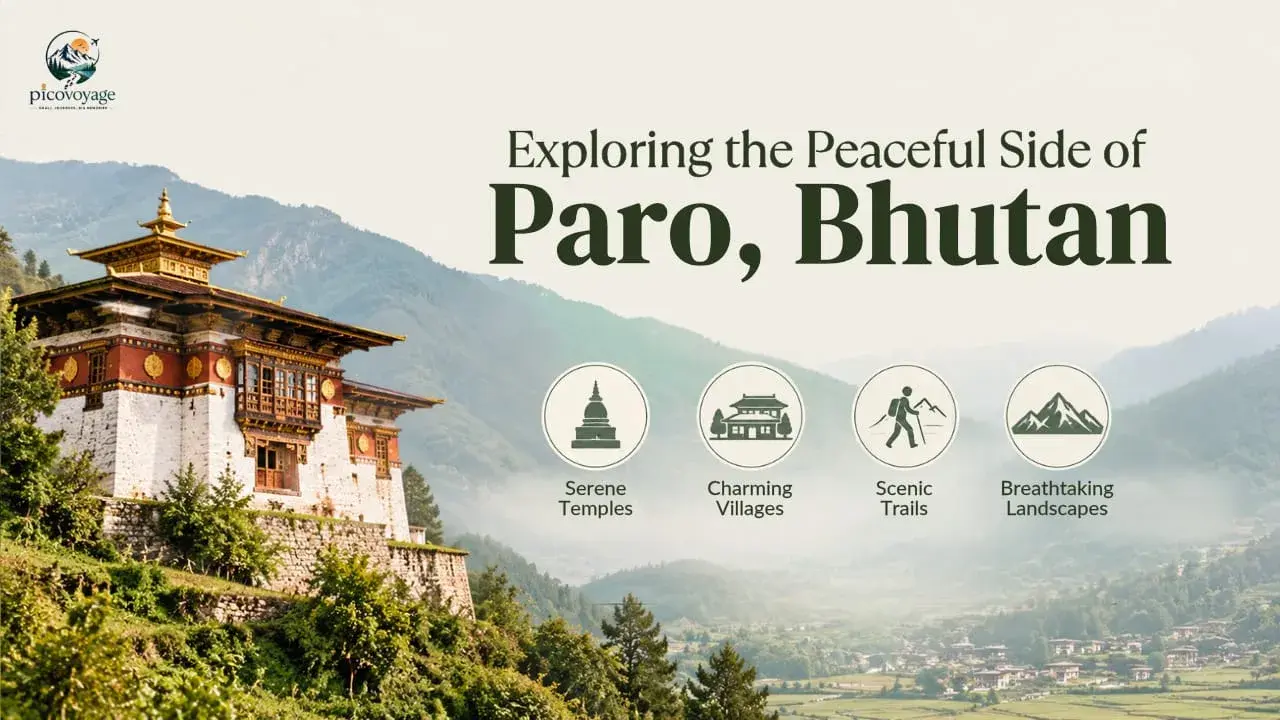
Kyichu Lhakhang is best saved for the late afternoon, when the courtyard is peaceful and the light is golden. It is one of the oldest temples in Bhutan, surrounded by villagers turning prayer wheels.
Walk around the temple and prayer wheels in a clockwise direction
Check with your guide before taking photos inside
Wander leisurely around the adjacent village lanes
Slowly is the best way to get the spots most people miss. Paro’s riverbank lanes, paddy-field walkways and mountain trails make every ride and walk an adventure of its own.
Cycling and Walking in Paro: Where Are the Best Slow Routes?
If you want to experience Paro rather than just seeing it from a car window, comfortable travel is the answer. Cycling in the Paro valley is a joy, as the valley floor is flatter than much of Bhutan, the roads are peaceful, and the air is clean. The best slow roads are through rice paddies, apple orchards and roadside shrines with almost no traffic.
The famous route follows the Paro Chhu river to Drukgyel Dzong, meandering through countryside and little hamlets. Stronger riders can take on the climb to Chele La, one of Bhutan’s highest motorable crossings at around 3,900m, where prayer flags swarm the peak, and the vistas extend toward Jomolhari. Many hotels can arrange bikes and local guides, so inquire when you book in.
But just how hard is it to ride at this altitude? Even fit cyclists feel the thin air, and a trip that seems easy on the map can take your breath away. Get comfortable first, spend a day slowly pedaling, and take more water than you think you need.
Where Can You Take an Easy Morning Walk in Paro?
Walking in Paro is equally rewarding, and you don’t need hiking boots for the gentle routes:
- Path along the riverside at Nyamai Zam bridge below Rinpung Dzong.
- Kyichu Lhakhang village loop through the paddy fields
- Sunrise over forest paths near Zuri Dzong
Begin with the river length. The early mist on the paddies makes it the most peaceful introduction to the valley, under two hours at a leisurely pace.
Paro is stunning from the saddle or the trail, but the real magic begins when you sit down at a local restaurant, watch a masked dance or drink butter tea with a farmer, for the valley’s traditions are as alive as its surroundings.
What Makes Paro’s Culture, Food and Festivals So Special?
The Bhutanese culture in Paro is not put on for foreigners. “It’s just the way people live and that’s what makes the culture, food and festivals here so special. Men with knee-length gho and ladies in ankle-length Kira can be seen at schools, offices and monasteries during the week. You might also witness archery, the national sport, played on open fields, with loud tunes and friendly banter between teams.
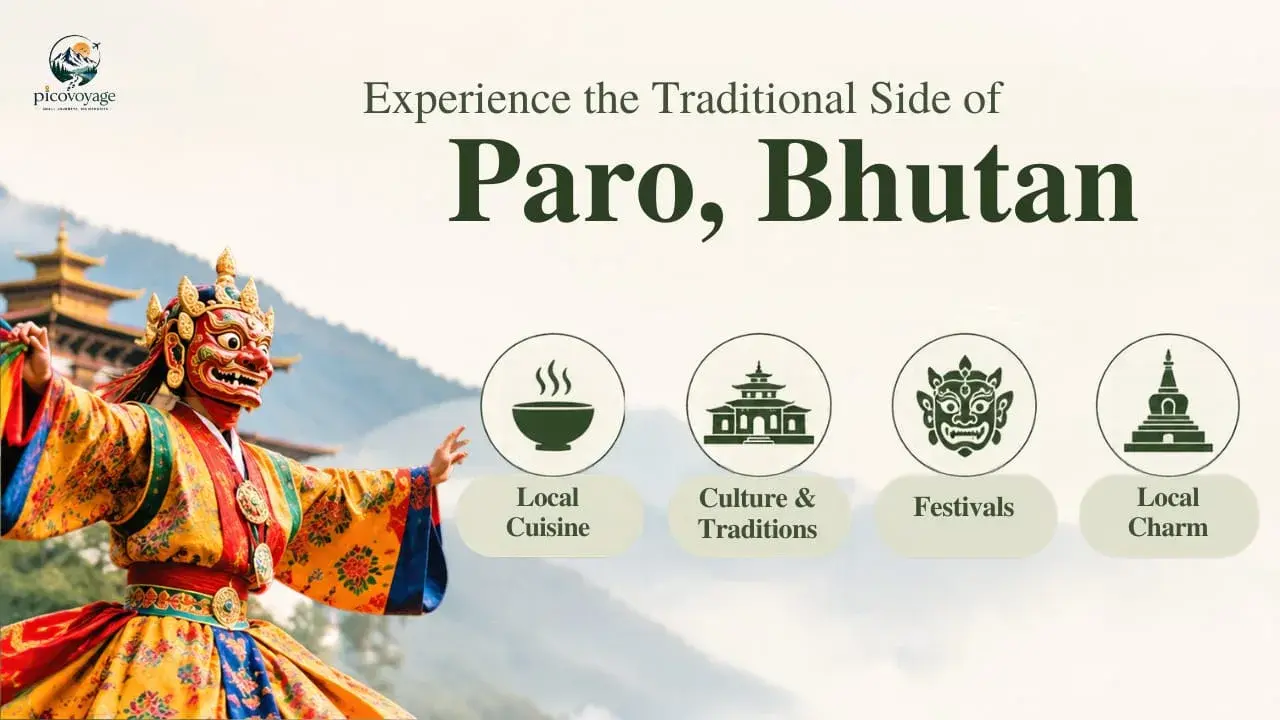
Food is the simplest path to everyday existence. Almost every table has ema datshi, a spicy stew with chilies and cheese, generally served with red rice cultivated in the lowlands. Try the salty butter tea called suja at least once. Order a platter of momos in a small local eatery in town. Here’s what you need to know at the table:
Vegetarian options are easy to find across Paro, Bhutan.
Most kitchens will lower the chilli level if you ask.
Butter tea is an acquired taste, so take small sips first.
What Is the Paro Tshechu Festival?
The greatest event in the valley is the Paro Tshechu, held each spring. Brightly costumed, masked dancers perform religious dances, and on the last day a large thangka is unfurled at daybreak, gathering families from all across the region. If you want to be in town for the festival, make your reservation early, as rooms are filling up quickly.
On ordinary days, you will see little rituals: butter lights lit up in temples, seniors turning prayer wheels on morning walks, stone cairns left at mountain passes. Take pictures and learn and ask.
After a day of temples, trails and festival color, you’ll want somewhere to rest that doesn’t lose the magic, so here’s how to pick a stay in Paro that matches your travel style, from riverside comfort to traditional charm.
Best Hotels in Paro Bhutan: Where Should You Stay?
The choice of the top hotels in Paro, Bhutan depends on one simple thing: what kind of trip you are looking for? Paro’s hotels range from cozy family-run guesthouses to full-service resorts, and location is more important than most travelers realize.
Valley-floor keeps you close to town and the river trails so you can step out for a morning walk or ride without needing a car. Hillside lodgings are quieter, with expansive views and a calm hard to rival. Whatever you choose, compare a few fundamentals before you book:
- Distance to the river trails and Paro Taktsang trailhead
- Bike support, guides and an early morning breakfast
- Style, contemporary comfort or traditional Bhutanese style
Please be advised that rates are seasonal; for current prices, please contact the hotel directly.
Riverfront Resort or Traditional Stay: Which Suits You Better?
If you’re expecting a spa, sophisticated service and a comfy spot to relax after a long climb, a modern riverside resort will suit you. If you want to feel the culture from the moment you walk in, a traditional residence with carved wood accents and home-style meals suits you.

Both kinds are good for cyclists and walkers as the river trails start near the main hotel area. Ask three basic questions before you book: do they serve an early breakfast on your Tiger’s Nest day, do they rent bikes, and do they have cultural evenings? A decent hotel will say yes to most of them gladly.
A superb stay sets the tone, but a pleasant journey depends on the minor elements, from altitude and weather to temple manners and packing. So before you lock in your plans, here are the practical recommendations that save time, energy and a few common mistakes.
What Should You Know Before Exploring Paro?
If you’re expecting a spa, sophisticated service and a comfy spot to relax after a long climb, a modern riverside resort will suit you. If you want to feel the culture from the moment you walk in, a traditional residence with carved wood accents and home-style meals suits you.
Both kinds are good for cyclists and walkers as the river trails start near the main hotel area. Ask three basic questions before you book: do they serve an early breakfast on your Tiger’s Nest day, do they rent bikes, and do they have cultural evenings? A decent hotel will say yes to most of them gladly.
A superb stay sets the tone, but a pleasant journey depends on the minor elements, from altitude and weather to temple manners and packing. So before you lock in your plans, here are the practical recommendations that save time, energy and a few common mistakes.
What Should You Pack and How Should You Behave at Temples?
Pack good walking shoes, a warm layer, modest attire for temples, and a water bottle to refill. Temples deserve a bit of respect, and the rules are simple: take off your shoes and hat before going in, never point your feet at an altar, and go clockwise around chortens and prayer wheels. A little notebook is also handy, because you will meet people whose names and tales you will want to remember.
You already know how to pace your days, pack smart and respect the places you visit, so all that’s left is to transform these concepts into a vacation that suits your time, your speed and your style, and the final part teaches you just how to begin.
Conclusion: Ready to Plan Your Paro Bhutan Trip?
Paro, Bhutan, is a location that rewards those who take their time. The hike to Paro Taktsang is unforgettable, but so are the minor moments in between the huge sights: a tranquil morning ride down the river, a calm hour within Kyichu Lhakhang, a bowl of ema datshi shared with your guide. Walk or pedal when you can, let the valley decide your pace, and you’ll go home with stories no checklist could provide.
Paro, whether you stay at a riverfront resort or a traditional guesthouse in the paddy fields, has an unusual quality: a place that feels both ancient and alive. Pick your season, pick your travel style, and leave a little room in your days for the unexpected, since that’s where the best memories are made. If you need help arranging your trip to Paro, ask Picovoyage and take the first step toward an experience that you will talk about for years.
Frequently Asked Questions
How many days do you need in Paro?
Two to three days is ideal. That is enough for Paro Taktsang, the main temples and dzongs, and one slow cycling or walking route without rushing. A single night only gives you a glimpse of the valley.
What is the best time to visit Paro?
Spring (March to May) brings blooming rhododendrons and festival season. Autumn (September to November) offers crisp air and the clearest mountain views. Winter and monsoon are quieter, with fewer people on the trails.
Is the Tiger’s Nest hike worth it?
For most travellers, yes. The monastery slowly appears through the forest, the trail is peaceful, and arriving on your own feet makes it memorable. Families, older pilgrims and first-time hikers complete it every day by walking slowly and resting often.
How long does the Paro Taktsang hike take?
Plan on five to six hours for the round trip. The trail starts at around 2,600 metres, and the monastery sits about 900 metres above the valley floor. A small cafeteria roughly halfway up gives you the first clear view and a tea stop.
What should you know before hiking to Paro Taktsang?
Start by 7 or 8 am in shoes with good grip, and carry water and a light jacket. Cameras, phones and bags are not allowed inside, so use the lockers. Cover your shoulders and knees out of respect for the monks.
Is Paro good for cycling and walking?
Yes. The valley floor is flatter than most of Bhutan, and the roads and paths are quiet. The classic ride follows the Paro Chhu river toward Drukgyel Dzong, while strong riders can climb to Chele La at about 3,900 metres. Because of the altitude, rest for a day first, go slowly and carry plenty of water.
What are the hidden gems in Paro?
Drukgyel Dzong, a ruined fortress with a view of Jomolhari, is one. Others are Dungtse Lhakhang with its murals, the National Museum in the old Ta Dzong watchtower, Zuri Dzong hill, and the village lanes around Shaba and Bondey.
Do you need a guide in Paro?
In most cases, a licensed Bhutanese guide is required for visitors, especially for the Tiger’s Nest and temple visits. A good guide also explains the stories behind the murals and rituals and adds local context. Confirm the current rules with your travel planner before you go.
What is the Paro Tshechu festival?
It is the biggest festival in the valley, held each spring. Masked dancers perform sacred dances, and on the last day a giant thangka is unfurled at dawn. Rooms fill up quickly, so book early if you plan to attend.
Where should you stay in Paro?
It depends on your travel style. Valley-floor stays keep you close to town and the river paths, while hillside stays are quieter with wide views. Compare distance to the trails, bike and guide help, early breakfast options and style, and check current rates directly with the hotel.
Related Tour Packages
Bhutan Tour Package – 6 Nights 7 Days
- Hotel Stay
- Sightseeing
- Cab Transfer
- Meals
Bhutan Tour Package – 7 Nights 8 Days
- Hotel Stay
- Sightseeing
- Cab Transfer
- Meals