
By picovoyage · Reviewed 2026-11-04 by Picovoyage
Why Is Phuentsholing the Perfect First Stop in Bhutan?
Why Do Most Travellers Start Their Bhutan Journey Here?
Phuentsholing Tourist Places: Where Should You Go First?
Which Phuentsholing Attractions Are Easy to Cover in One Visit?
If you are a nature lover, add Amo Chhu Crocodile Breeding Centre to your must-see list. It’s a fun and informative stop, especially if you’re traveling with kids.
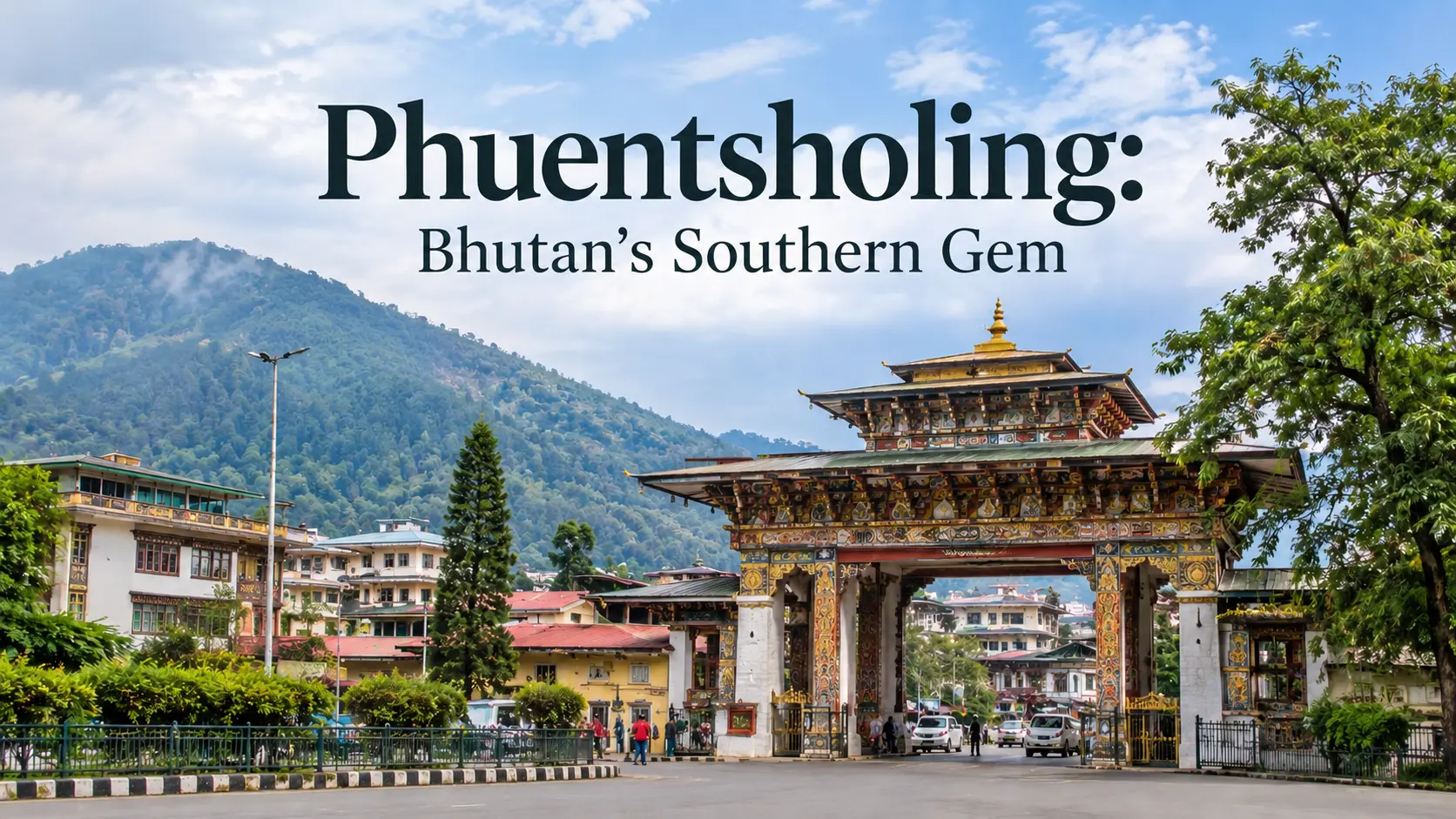
How much time do you really need? From my experience of helping travelers to arrange their Bhutan sightseeing, half a day is more than enough to see all four of them. The sites are close together so you spend less time in the car and more time exploring. This makes Phuentsholing, Bhutan an ideal place to start for anyone who is planning to visit Bhutan’s top tourist destinations and an excellent way to enjoy Phuentsholing tourism at a leisurely pace.
After looking at the busy gate, the temple, and the riverfront, you want to dive deeper into the legends behind this town. So, let us take a walk around the historical landmarks and sacred corners of Phuentsholing.
Historical Places and Sacred Corners Around Phuentsholing
Where Can You Feel the Old Stories of Bhutan?
A good place to start is Kharbandi Monastery, also known as Rinchending Goemba, high on a green slope above the town. Founded in 1967 by the Royal Grandmother, Ashi Phuntsho Choden, it has gardens, painted walls and sweeping views over the plains. Many visitors stay a while, listening to the wind and the soft tinkling of the bells. Monks may be chanting, families may be lighting butter lamps, and prayer flags and wheels surround the grounds. Watch the rituals from a respectful distance.
Phuentsholing Market: Local Flavours, Crafts and Daily Life
What Can You Eat and Buy at the Local Market?
Little masks and carvings in wood.
Hand-crafted paper and basic souvenirs.
Local cheese, chilies, fresh vegetables.
So when is the best time to go? From my own market walks with travelers – Mornings are the loveliest. The stalls are newly stocked, the air is cooler, and the traders have more time to chat. A little friendly bargaining is great, but keep it light and polite; many of these are made by local families.
An hour here adds a real flavor to your Phuentsholing trip and gives your trip a warm, personal touch that the temples alone cannot.
So you have your bag full of goodies and your stomach full; you are ready to put it all together, so let’s look at the roads that lead from Phuentsholing to Thimphu and Paro.
Phuentsholing to Thimphu and Paro: Which Road Do You Take Next?
The mountains call beyond the gate, beyond the monastery and the market. Phuentsholing is the access to 2 scenic routes into the heart of Bhutan. The drive itself is part of the adventure as you will drive past some of Bhutan’s must-see sights whichever way you go, to the capital or the airport valley.
Is It Better to Head to the Capital or to Paro First?
This is a question that is asked by many travelers and the truth is it is contingent upon your mood. The road from Phuentsholing to Thimphu climbs steadily through winding mountain curves, past pine trees, foggy valleys, and small villages. It will take five to six hours depending on traffic and weather. If you’re prone to dizziness on curves, take some motion-sickness medication.
The road from Phuentsholing to Paro goes almost the same way until the roads separate around Chuzom, where two rivers meet. It is about the same distance and time, perhaps five to six hours, and the vistas are fantastic. It is good for people flying out of Paro or those who want to see its main attractions early.
Ready to Make Phuentsholing the Start of Your Bhutan Trip?
Frequently Asked Questions
What are the best places to visit in Phuentsholing?
The top Phuentsholing tourist places are Bhutan Gate, Zangto Pelri Lhakhang, the Amo Chhu riverside, the Crocodile Breeding Centre, Kharbandi Monastery, Rinchending Monastery and the local market. Most of these are close together, so they are easy to cover in one visit.
How many days do you need for Phuentsholing sightseeing?
Half a day is enough to see the main attractions, and one full day lets you add the market and a monastery visit at a relaxed pace. Most travellers spend one night here before moving on to Thimphu or Paro.
Is Phuentsholing a good starting point for a Bhutan trip?
Yes. It sits right on the border next to Jaigaon, has a warm, low-altitude climate, and gives you a gentle introduction to Bhutanese culture, food and dress. It also has direct road links to Thimphu and Paro.
What is Phuentsholing market famous for?
The market is known for local snacks like momos, butter tea, and sweet butter-based treats. You can also find handwoven textiles, wooden carvings, handmade paper, local cheese, chillies and fresh vegetables. Mornings are the best time to visit, when stalls are freshly stocked.
How long does it take to travel from Phuentsholing to Thimphu?
The drive usually takes around five to six hours, depending on traffic and weather. The road climbs through winding mountain bends, so carry motion-sickness tablets if you tend to feel dizzy on curves.
How do you get from Phuentsholing to Paro?
You travel by road, usually in a private car or taxi. The route follows much of the Thimphu road and splits near Chuzom, where two rivers meet. It takes a little longer than the Thimphu drive, but the views are lovely.
Do Indian travellers need a permit to enter Bhutan through Phuentsholing?
Yes. Indians do not need a visa, but they do need an Entry Permit, and they can apply online before the trip or at the point of entry. Road travellers collect it from the Immigration Office in Phuentsholing. Note that the Entry Permit covers only Thimphu and Paro, so other regions need a special area permit.
What documents are needed for the Bhutan Entry Permit?
Indian travellers need a valid passport or a voter ID card. Passport validity should be at least six months if you carry a passport. Rules and fees can change, so check the official Bhutan Immigration website before you travel. Currently, a Sustainable Development Fee waiver is available for stays of up to 24 hours in border towns like Phuentsholing, under designated-zone conditions. Confirm the latest terms before you go.
Are there historical places near Phuentsholing?
Yes. Kharbandi Monastery, built in the late 1960s, sits on a green hillside with gardens and wide views over the plains. Rinchending Monastery shows local temple traditions up close. Both are great additions to your list of historical places in Bhutan.
What local food should you try in Phuentsholing?
Try ema datshi, the famous chilli and cheese dish, along with momos and suja, the salty butter tea. Small local cafés and market stalls are good places to taste these. Many stalls let you sample before you buy.
Related Tour Packages
Bhutan Tour Package – 6 Nights 7 Days
- Hotel Stay
- Sightseeing
- Cab Transfer
- Meals
Bhutan Tour Package – 7 Nights 8 Days
- Hotel Stay
- Sightseeing
- Cab Transfer
- Meals