Travel guide

Chenrezig Statue & Skywalk: Discover Pelling’s Spiritual Wonder

Located in the beautiful hills of Pelling, the Chenrezig Statue and Skywalk offer a blend of spirituality, impressive architecture, and breathtaking Himalayan views. Featuring a magnificent statue of Lord Chenrezig and a glass-bottom skywalk, this landmark is a must-visit attraction for its peaceful atmosphere and panoramic mountain scenery.

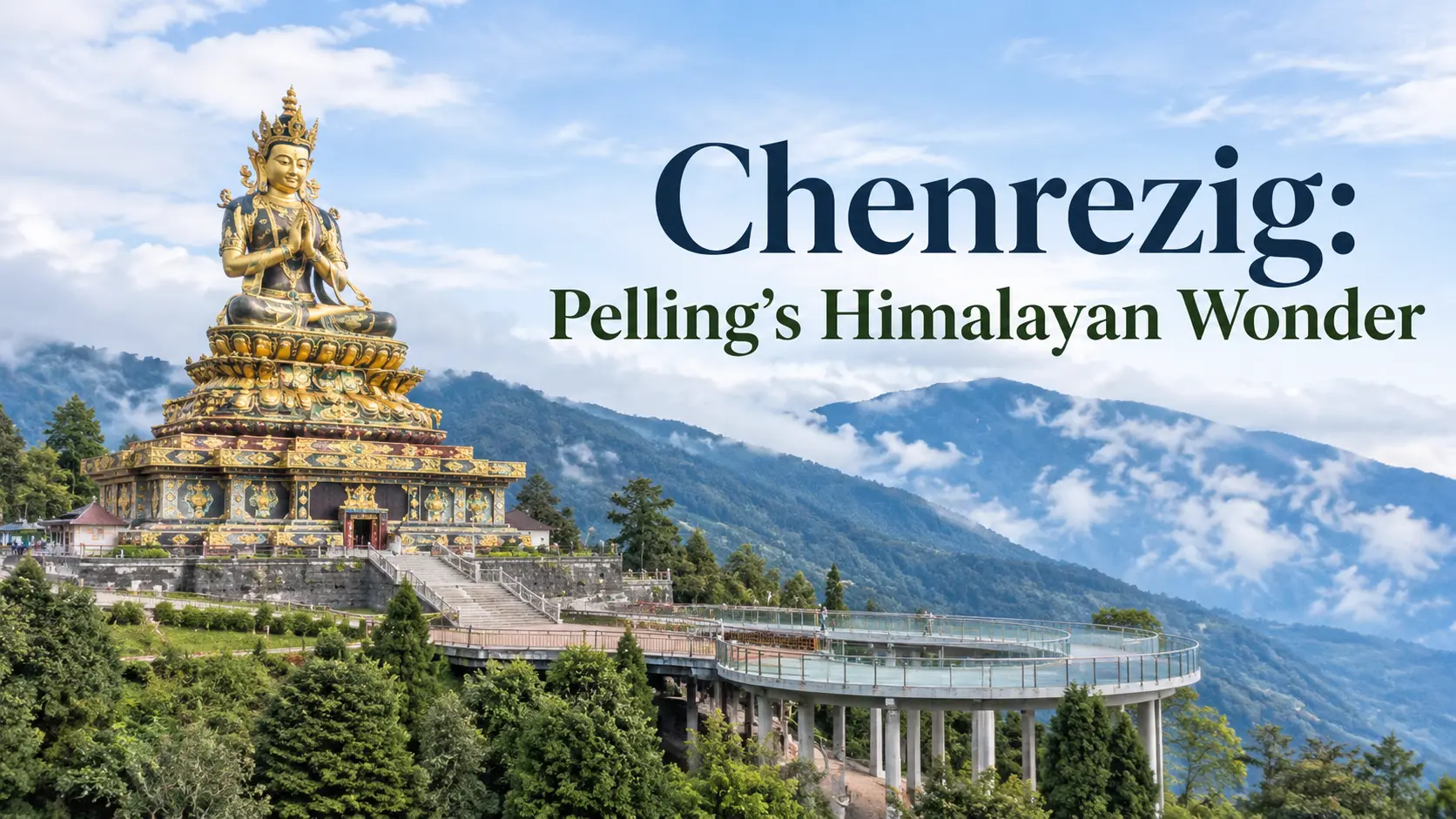
Chenrezig Statue and Skywalk in Pelling, Sikkim, featuring a magnificent golden statue overlooking lush green Himalayan mountains and a glass-bottom viewing walkway.

By picovoyage · Reviewed 2026-11-03 by Picovoyage


From Pelling, the first sight is a still shape among the hills. Pelling has recently become famous for the Chenrezig Monument. Near Sanga Choeling, it is 137 feet (42 meters) high. It stands opposite the Pelling Skywalk, India's first glass walk. People can walk on the clear floor and see the monument and the distant Kanchenjunga range. The Chenrezig statue and the skywalk in Sikkim give you two quite different sensations: the peaceful calm of prayer, and a faint throb of agitation.

The structure was completed in November 2018 and opened to the public at approximately 7,200 feet above sea level. Since then, it has become one of the most talked-about tourist places in western Sikkim. This guide will cover the monument's history, what it’s like to walk the skywalk, and nearby sights. We will also cover the weather and how it can affect your plans, so you can plan a more comfortable and meaningful trip to the Himalayas, whether it is your first or your fifth.

What Is the Story Behind the Chenrezig Statue at Sanga Choeling?

Every landmark has its tale. The story of the Chenrezig statue in Sanga Choeling began with a simple idea: to give West Sikkim a place where faith and tourism meet. Sanga Choeling is an ancient monastery site in the hills above Pelling, and the statue stands nearby, visible from almost anywhere in town.

Who Is Chenrezig, and Why Do Pilgrims Climb These Stairs?

In Tibetan Buddhism, the bodhisattva of compassion is known as Chenrezig or Avalokiteshvara and is closely connected with the chant Om Mani Padme Hum. What does it mean for people who visit such a statue? Sit on the steps for a few minutes and watch the pilgrims go by.
The visit includes the climb. A long stairway leads to the monument, and golden prayer wheels line both sides; most visitors spin one by one on their way up. It contains a café and a small gallery and is surrounded by a destination park, built at a total cost of Rs 46.65 crore and inaugurated in November 2018. That combination makes it one of the most family-friendly and first-timer-friendly spiritual locations in Pelling. This Chenrezig statue in Sikkim is what visitors remember most among the places to see in Pelling, Sikkim, and among the most popular tourist places in Sikkim for spiritual travelers.
Having seen its calmer side, let’s discover what it feels like to walk on India's first glass skywalk.

How Does Walking on India’s First Glass Skywalk Feel?

Walking on India’s first Glass Skywalk blends thrill with a flutter in your tummy. About Pelling Skywalk: Not far from Pelling town, this transparent walkway extends from the mountainside and overlooks the Chenrezig statue. The first step is the hardest, with your brain screaming to stop and your eyes seeing the valley far below. Most people relax, and by the third or fourth step they begin to smile.

Skywalk Views: Kanchenjunga, the Statue and the Prayer-Wheel Staircase

Through the glass, you can see the Chenrezig statue dominating the scene, with the long flight of steps leading down to the prayer wheels. On a clear morning, the Kanchenjunga range appears on the horizon. Look down, and the green hills seem to slide away beneath your feet. This Sikkim glass skywalk isn't an extreme adventure, but a simple thrill. The Chenrezig statue and skywalk in Sikkim provide spiritual peace and soothing excitement in one place.
Things to consider:
Photo Angles: The staircase is a classic shot. Keep the Kanchenjunga line in the background if the sky is clear.
Who may not enjoy it: If you don't like heights, the glass floor may be a bit much, so don't be shy about sitting on the side.
Times & Entry Info: Times may change. Ask your driver or local tourism team on the day.
Once your legs are back, there is loads more to see nearby.
 We will discover the sights around Pelling that are well suited for a monument in one day.

Which Pelling Sightseeing Places Pair Well With the Statue in One Day?

The nice thing about Pelling is that all the main attractions are close together, so with a well-planned day you can cover the Chenrezig statue and a couple of other highlights without feeling rushed. Most of the things to see in Pelling are on a spiritual and historical string, so it is easy to make a route with a natural flow that isn't crowded.

A Slow Half-Day Loop: Pemayangtse Monastery, Rabdentse Ruins and Khecheopalri Lake

How do you fit it all in without feeling squeezed? Start your day with a visit to the Chenrezig statue and skywalk for some fresh air, then let the rest of your day unfold in a loose circle. First Pemayangtse, then Rabdentse, and then Khecheopalri if you still have energy. Khecheopalri is a bit further out than the other two, so consider it an optional last stop. For those who prefer culture over crowds, here are some of Sikkim's most famous tourist spots. Together, they give you a complete taste of the place. Places to See in Pelling, Sikkim:

Pemayangtse Monastery: One of Sikkim's oldest monasteries, a perfect place for spiritual travelers seeking calm rooms, murals, and wooden sculptures.
Rabdentse Ruins: The ruins of the old Sikkim kingdom’s second capital. Ideal for history buffs who enjoy roaming about on stone paths and woodland trails.
Khecheopalri Lake: A quiet, sacred lake known as the wishing lake, suitable for travelers seeking stillness and a short woodland trek.
Take it easy, bring water, and allow time for a tea break along the way. The joy of this trip is not in ticking boxes but in noticing small things, like the sound of prayer wheels or the fragrance of incense. If you do it this way, the Chenrezig statue is the starting scene of a greater play, not just a single stop.
It helps to know the sky's behavior before you finalize your strategy. Let us see when the clouds clear in the Kanchenjunga range around Pelling.

When Do the Clouds Lift Off the Kanchenjunga Range Near Pelling?

If you've stood on a ridge in Pelling, you'll know the Himalayas can be coy. One morning the whole range of Kanchenjunga is pink and gold; the next morning it is lost in cloud. This is why the weather is important when planning your visit to the Chenrezig statue and skywalk. The statue remains, but the sky changes behind it.

Clear Peaks, Misty Ridges and Cold Nights: What the Sky Looks Like All Year

So how do you calculate the proper time? People often ask about the best time to visit Sikkim, and for Pelling, it is contingent upon what you want to see. The best time is usually October to early December when the air is clear, and the Kanchenjunga views from the skywalk are sharp. "The nights in winter are cold", the mornings bright. Spring (March to May): rhododendrons in flower, a mix of sun and light cloud. Monsoons from June to September paint the hills green, though the mountains are often shrouded in mist. 

A few habits make coping with the Sikkim weather much easier for sightseeing:

  • Go early: Mornings are generally the clearest, as clouds tend to roll in by the afternoon, so get to the monument and glass walkway soon after sunrise.
  • Rain-day backup: If the peaks are in the clouds, make for Pemayangtse Monastery or a café stop, and return to the skywalk when the sky clears.
  • Layer up: Pelling has sunny days, but the air can get chilly quickly up in altitude.

And remember the weather in the mountains can change in an hour. Flexibility is better than rigidity. Once the skies are sorted, you can start to think about the big picture. So let’s see how Pelling fits into a bigger Sikkim circuit.

Where Does Pelling Fit Into a Wider Sikkim Circuit?

Pelling is a perfect place to start a story about Sikkim because it is peaceful. Many travellers treat it as a brief stopover, but a rewarding opportunity to soak up the mountains and get used to the area before heading to busier places. Pelling is an excellent base from which to explore at leisure the many beautiful sights of Sikkim.

A West-to-East Route: Pelling’s Quiet Ridges, Then Gangtok’s Lively Streets

What does this journey truly represent? The first days at Pelling are spent on gentle walks in the early morning. You will see the glass skywalk, the statue of Chenrezig, and the rooms of the monastery. And when the day ends, you can sip tea while the hills disappear into darkness. The charm of Pelling is that it is so peaceful and there is nothing to rush you along.

Then the mood shifts to a full-day trip east, and Gangtok greets you with lively markets, cafe corners, colorful shop signs, and evening crowds on the main promenade. Gangtok's tourist spots offer a mix of vistas, monasteries, and local cuisine stops, and the contrast with Pelling makes both ends of the trip feel fresh. It is also one of the easiest ways to cover Sikkim’s highlights, with Pelling’s calm and Gangtok’s energy in one trip.
A relaxing 5-6 day rhythm could be something like this:
  • Day 1: Reach Pelling, check in and a chilled out evening walk to unwind.
  • Day 2: Full day to the Chenrezig Monument, Skywalk, and surrounding sights.
  • Day 3: Keep this as a transfer day with gorgeous breaks and an early night in Gangtok.
  • Day 4 & 5: Gangtok Sightseeing at leisure with some free time to explore markets and restaurants.
  • Day 6: Head home, or add a buffer day if you want to stay longer.
The idea is to spend a full day at each place, rather than cramming both into one rushed day. Travelers who plan this way tend to come home with calmer memories and better photos because they never have to race the clock. One of the most natural Sikkim tourism routes is this west-to-east flow.
Now that you understand how the parts fit together, let’s finish with a few final comments on bringing Pelling’s peace home.

Carrying Pelling’s Calm Home: Final Thoughts on the Chenrezig Statue and Skywalk

Some sites linger with you long after the vacation is over, and the Chenrezig statue in Pelling is one such place. It is the stillness of the prayer-wheel stairway, the first apprehensive foot on the glass, the sight of Kanchenjunga shining on a clear morning. Along with the nearby monasteries, ruins, and lakes, it shows that Pelling isn't a place to rush through. It’s a place to slow down, take a deep breath, and allow the mountains to do the talking.
We hope this guide helps you plan a journey that is as calm as it is memorable. So take your time, stay curious, and allow for unexpected little surprises; often, these become the best stories. If you are ready to make this plan a real Sikkim vacation, from the quiet ridges of Pelling to the busy streets of Gangtok, our experts at PicoVoyage would be happy to help you shape it. We wish you bright skies, safe journeys, and a heart full of wonderful memories.
A LITTLE MORE CLARITY

Frequently Asked Questions

Where is the Chenrezig statue located in Sikkim?

The Chenrezig statue stands at Sanga Choeling in Pelling, West Sikkim, on the hills above the town. It is visible from many parts of Pelling, so you can spot it even before you reach the complex.

How tall is the Chenrezig statue in Pelling?

The statue is 137 feet (42 metres) tall. It sits at an altitude of about 7,200 feet above sea level, which adds to the sense of height when you see it against the hills.

When did the Chenrezig statue and skywalk open to visitors?

The complex opened in November 2018. It includes the statue, the skywalk, a café and a small gallery within a destination park.

Who is Chenrezig, and why is the statue important?

Chenrezig, also known as Avalokiteshvara, is the Tibetan Buddhist bodhisattva of compassion. The statue is a pilgrimage site where many visitors spin the prayer wheels, pray or sit quietly.

What is special about the Pelling skywalk?

It is India’s first glass skywalk. From its transparent floor you can look straight at the Chenrezig statue and the prayer-wheel staircase, with the Kanchenjunga range visible on clear days.

Is the glass skywalk in Sikkim safe for families and first-timers?

It is a simple, gentle thrill rather than an extreme adventure, so many families and first-time visitors enjoy it. If you strongly dislike heights, you can watch from the side. Check current conditions and any restrictions on the day, because rules can change.

What is the best time to visit the Chenrezig statue and skywalk?

October to early December is usually the clearest period, with crisp air and sharp Kanchenjunga views. Spring (March to May) brings rhododendrons and mixed sun and cloud, while the monsoon (June to September) makes the hills green but often hides the mountains in mist.

What time of day is best for clear mountain views in Pelling?

Mornings are generally the clearest, and clouds tend to build by afternoon. Reaching the statue and skywalk soon after sunrise gives you the best chance of seeing the Kanchenjunga range.

What other places can I visit near the Chenrezig statue in one day?

A relaxed half-day loop can include Pemayangtse Monastery, the Rabdentse Ruins and Khecheopalri Lake. Khecheopalri is farther out, so treat it as an optional last stop.

How can I combine Pelling and Gangtok in one Sikkim trip?

A west-to-east route works well over 5 to 6 days. Spend the first two days in Pelling, use day 3 for the transfer, and give Gangtok days 4 and 5. Day 6 can be for departure or a buffer day.

TURN AN IDEA INTO A JOURNEY

Related Tour Packages