
By picovoyage · Reviewed 2026-10-15 by picovoyage
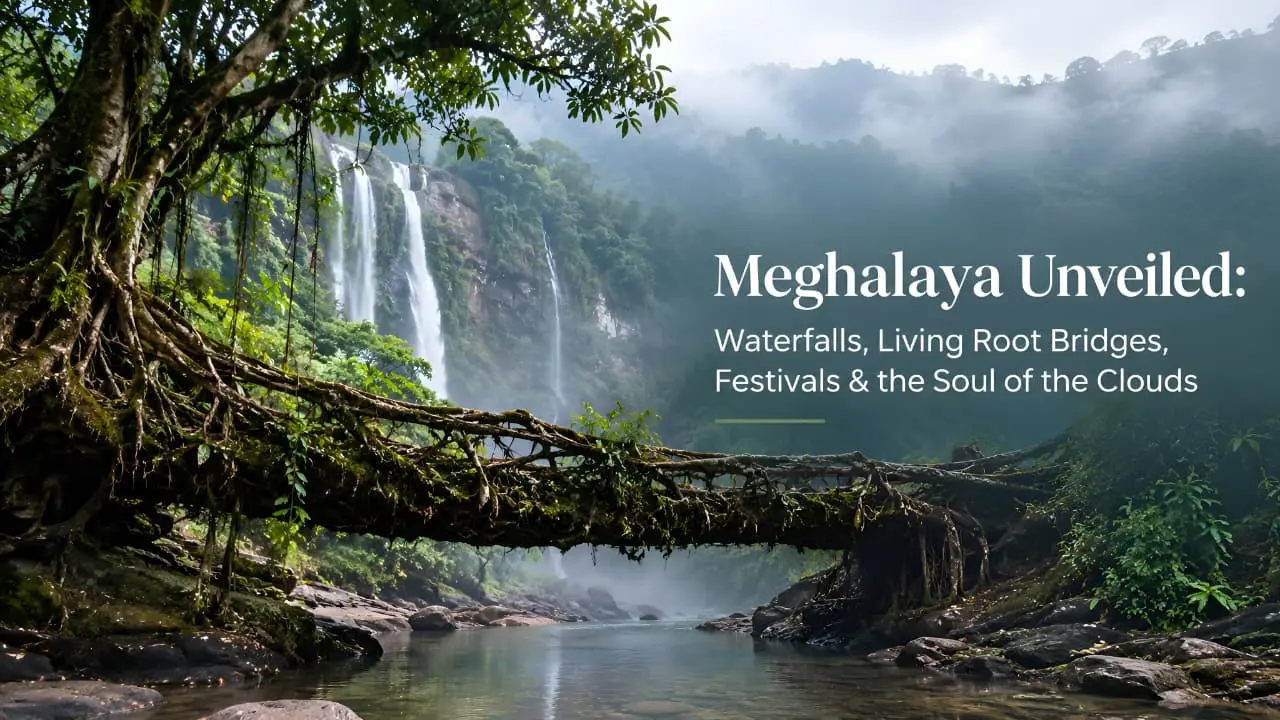
Stand on the edge of a cliff in Meghalaya, and you will witness clouds drifting slowly below your feet, as if the sky has come down to meet you. This is the Land of Clouds, where waterfalls flow from incredible heights, where bridges spring from the living roots of trees and every settlement has a story to tell. If you are wondering about the best places to visit in Meghalaya, you are in the right place. Tourism has boomed in Meghalaya in recent years, and it’s simple to understand why.
In this guide, we’ll take you through the waterfalls, the root bridges, the colorful festivals, and a basic plan that works from any city in India. If you are a Meghalaya travel lover for its views or wish to compare Meghalaya trip packages, you will find practical solutions here.
Why Is Meghalaya Called the Abode of Clouds?
Meghalaya is situated in the Northeast of India, and its name means “the abode of clouds.” Once you arrive, you’ll realize why. The state consists of the Khasi, Garo, and Jaintia hills, where clouds often blow through streets, valleys, and even your hotel balcony. Cherrapunji and Mawsynram are some of the wettest areas on earth; therefore, the hills stay green for most of the year, and waterfalls, caves, and live root bridges are everywhere. This natural beauty is the reason behind increasing Meghalaya tourism, as more people prefer it over busy hill areas.
Is Meghalaya a good place to visit for the first time? And we say this from experience. We've walked these paths several times with our staff, and even first-time visitors found the state serene, safe, and welcoming. Just bring a rain jacket; the weather might change in minutes. The first thing our guests feel when they land in Shillong is the cold breeze.
When Is the Best Time to Visit Meghalaya?
Every season in Meghalaya is unique. This easy travel overview to Meghalaya will help you decide the best month to visit.
Season | Months | Weather | Best For |
Winter | Nov-Feb | Cool, clear skies | Sightseeing, Dawki boating |
Spring | Mar-May | Mild, pleasant | Treks, caves |
Monsoon | Jun-Sep | Heavy rain, lush green | Full waterfalls |
Autumn | Oct | Fresh, less crowded | Festivals, photography |
If waterfalls are at the top of your wishlist, plan your Meghalaya trip during the monsoon. Winter is the safest choice if you prefer clear sights and easy walks.
Now that you know when to travel, let’s consider where to go. If it is your first time in Meghalaya, here are the top spots to visit.
Best Places to Visit in Meghalaya for First-Timers
The state of Meghalaya has a lot of beautiful places tourists don't know where to start. Starting with Shillong and Cherrapunji will give you the best mix of views, lakes, caves, and waterfalls in the least amount of time.
Which Tourist Places in Shillong and Cherrapunji Are Worth Your Time?
Visitors to Shillong can enjoy easy, peaceful sightseeing. It's Umiam Lake, with calm blue water and hills all around. One can take a stroll in the evening around Ward's Lake, see the valleys from Shillong Peak, and learn about the cultures of Northeast India at the Don Bosco Museum. There, the tourist spots in Cherrapunji seem rougher. Wei Sawdong Falls has blue pools, and Nohkalikai Falls is very high and falls a long way. Mawsmai Cave is also very inviting to explore. With Eco Park, you can see the hills more clearly.
How long do you need to see the most popular tourism spots in Meghalaya? Shillong and Cherrapunji's best sights can be seen in two days, and you can take it easier with three days. For your first trip, start at Umiam Lake and Nohkalikai Falls. Birdwatchers and photographers should not miss the sunrise at Shillong Peak. Nature fans will enjoy Mawsmai Cave and Wei Sawdong Falls.
Let's meet the stars of the show now that you know where to go. Meghalaya has waterfalls that look like they belong in a dream.
Waterfalls in Meghalaya That Look Straight Out of a Dream
In Meghalaya, the waterfalls change their mood with the seasons. Then, from June to September, they roar with full fury, and the whole hillside turns bright green. The monsoon. In winter, the flow is calmer, yet the skies are clear, and the pools seem serene and beautiful. Both are wonderful. It's just a matter of what you want more: raw power or peaceful views.
From our trips, we always urge travelers to wear strong-gripping shoes, because rocks near overlooks turn slippery rapidly. Is it safe to visit Meghalaya waterfalls in the rain? Yes, with a few simple actions. Check the weather in the morning. Don't go down to the pools after it has rained heavily. Remember to stay behind the safety barriers. An early start helps a lot, since most waterfalls are best seen before the afternoon clouds sweep in.
Which Waterfall Should You Visit First?
For a quick and easy trip, start your journey at Elephant Falls in Shillong or head to Nohkalikai Falls in Cherrapunji for the most stunning vista. Elephant Falls is a short walk and has three levels. The highest drop in India is Nohkalikai, best seen between June and October.
If you are in a hurry, this table can help you select from the best waterfalls in Meghalaya.
Waterfall | Location | Best Time | Highlights |
Nohkalikai Falls | Cherrapunji | Jun-Oct | Tallest plunge fall in India |
Elephant Falls | Shillong | Year-round | Easy access, three tiers |
Seven Sisters Falls | Cherrapunji | Jul-Sep | Seven streams in one view |
Wei Sawdong Falls | Cherrapunji | Jun-Sep | Tiered falls, turquoise pools |
Elephant Falls is the easiest start for first timers, and Nohkalikai Falls is the one you will remember the longest. Instead of speeding through all four, pick one or two and spend enough time on each.
But waterfalls are only part of the narrative. Deep in the woods are bridges that no skilled worker created with tools, for they were grown of living roots. Let’s see how trees become bridges in Meghalaya.
Living Root Bridge Meghalaya: How Do Trees Become Bridges?
A living root bridge in Meghalaya is not constructed with steel or concrete. It is growing. For centuries, the Khasi people have been guiding the roots of rubber fig trees over rivers, using bamboo or hollow tree trunks to push them in the appropriate direction. Their roots expand and knot together over many decades, and eventually form a bridge strong enough to support many people at once. Some are over 100 years old, and get stronger with age.
Here, the rain falls so heavily that the wooden bridges decay in a few years, yet life roots keep sprouting and mending themselves. Why do the Khasi people sprout bridges, not build them? The answer is simple: Nature accomplishes the job better. We constantly tell guests this is the perfect example of people and nature working together. If you are new to treks, Riwai is an excellent alternative for beginners, as it takes much less work than the major one.
How Hard Is the Double Decker Living Root Bridge Trek?
In Meghalaya, the most famous Double Decker Living Root Bridge is located near the Nongriat hamlet. It’s around 3,500 steps to go down to it, and the whole trip takes 3-4 hours round trip. The journey down is easy, but the way back up is the real test. Go carefully, take small rests. Along the trail you will pass clear streams, travel through deep green forest, and cross little hanging bridges.
Our guides constantly stress, “Start early and take it slow.” We’ve seen plenty of travelers enjoy the walk more by simply following that one rule. Here are some other recommendations that will make your day easier.
Starting early
Wear shoes that stick
Bring water and cash.
Get a local guide
But when you reach the bottom, the view of the two-level bridge makes it all worth it. Enjoy the silence. Take a rest before the walk back.
The root bridges demonstrate how Meghalaya's inhabitants live in harmony with nature, but the state has more surprises up its sleeve beyond the trails. Come explore the secret caves of Dawki and Mawlynnong, hidden treasures.
Hidden Gems: Dawki, Mawlynnong and Secret Caves
The most enjoyable moments in Meghalaya are often away from the tourist sites. Dawki, Meghalaya, is a small border town on the Umngot River. The water here is so clean that boats appear as if they are floating in the air. A slow boat trip means you get to see all the stones on the riverbed, and in the proper light, it appears surreal. Most travelers claim this is the one time they will never forget.
A short distance lies Mawlynnong Village, famous for its cleanliness, flower-decked roads and pleasant residents. Neat front yards are kept in every house and bamboo dustbins are put in every corner. Is Mawlynnong really the cleanest village in Asia? Over the years, it has earned its name, and when our team visits, we always agree that the pride of the locals is evident in every path. Don’t miss the single-decker root bridge here, and climb the sky-view tower for a sweeping view over the lush hills and the plains beyond.
Which Meghalaya Caves Are Easy to Explore?
If you prefer a little adventure without much effort, the caverns of Meghalaya are a good option. The simplest to explore is Mawsmai Cave in Cherrapunji. It has an illuminated, well-designated trail so first-timers and families can travel through comfortably. Some of the tight sections take a bit of bending, but nothing too hard. Krem Mawmluh is a bigger, rougher cave and is best for those who are fit and enjoy a tougher walk.
Check cave timings before you visit as they can vary with the season and weather. “Best time is usually in the morning when crowds are less, and the cave is calm and cool.” The floor can be moist, so our experts always recommend wearing shoes with strong traction.
Rivers, villages and caves will give you the natural side of Meghalaya. But the heart of this region beats in its people and their customs. Let us observe how the hills come alive during the festivals of Meghalaya.
Meghalaya Festivals: When the Hills Come Alive
Meghalaya is more than only waterfalls and root bridges. Its festivities display the actual heart of the hills, with music, dance, and colorful costumes. Each tribe has a unique way of celebrating, and being a part of one would surely make your trip to Meghalaya a memorable one. Here is a basic look at the key festivals of Meghalaya.
Which Festival Should You Plan Your Trip Around?
Nongkrem Dance is a Khasi festival held in November, where people in traditional dress dance to thank God for a good harvest. Shad Suk Mynsiem is another Khasi dance of thanks, and it is performed in April in Shillong. Wangala is also a Garo festival in November, with loud drum beats and flamboyant costumes. Behdienkhlam is a Jaintia holiday in July when people pray for good health. A tall pole is part of the ceremony.
In our experience with travelers, the best way to enjoy these events is to watch respectfully. Are these festivals in Meghalaya witnessed by tourists? Yes, most of the sites accept visitors. Always ask before taking pictures, dress modestly, obey your local guide, and keep a little distance during prayers.
Dates vary each year slightly as they follow the local calendar. Look at this table and pick a month that meets your plan.
Festival | Month | Tribe | What You’ll See |
Nongkrem Dance | Nov | Khasi | Traditional dance and music |
Wangala | Nov | Garo | Drum beats and colourful dress |
Shad Suk Mynsiem | Apr | Khasi | Thanksgiving dance |
Behdienkhlam | Jul | Jaintia | Prayers and a pole festival |
If you are a culture lover, November is a good pick with two festivals in the same month. Check exact dates before you book, so your vacation fits the bill.
Now that you know when the hills are partying, here’s how to get there: Here is a simple Meghalaya tour plan from any city in India.
Meghalaya Tour Plan: An Easy Itinerary From Any Indian City
Most people fly into Guwahati and then drive for about 3 hours to Shillong. This Meghalaya travel itinerary is good whether you are starting from Delhi, Mumbai, Kolkata, or anyplace else in India. Here is a basic Shillong tour plan covering an ideal schedule for Shillong in 3 days.
3 Days Shillong itinerary
Day 1: Guwahati to Shillong, Umiam Lake, Ward’s Lake
Day 2: Shillong to Cherrapunji, Nohkalikai Falls, Mawsmai Cave.
Day 3: Dawki Boat Ride & Mawlynnong Village Walk
Main highlights in 3 days. You can add the root bridge trek and a slower pace in five days, and caves, festivals, and calm towns in seven days. How many days should a Meghalaya tour be? Five days is perfect for most first-time visitors from our itineraries. If preparing is a lot, Meghalaya package trips or Guwahati Shillong Meghalaya tour packages can save time, and the Meghalaya tour & travel company Picovoyage, our team can handle your airport pickup.
How Do You Reach Meghalaya From Delhi, Mumbai, Kolkata and Bengaluru?
Wondering how to get to Meghalaya from your city? Most travelers fly into Guwahati, the main entry point to the state. From there, it is a straightforward three-hour road journey to Shillong. This table indicates the easiest way to begin from the bigger cities
City | Best Way | To Guwahati | To Shillong |
Delhi | Flight | 2.5-3 hrs | ~3 hrs by road |
Mumbai | Flight | 3.5-4 hrs | ~3 hrs by road |
Kolkata | Flight/Train | 1.5 hrs (air) | ~3 hrs by road |
Bengaluru/Chennai/Hyderabad | Flight | 3-4 hrs | ~3 hrs by road |
Flight times are subject to change; check before booking. Shillong Airport has limited flights; therefore, book ahead if you plan to come during a festival month.
You have a plan in hand now, but a few little recommendations could make your journey a lot smoother. Here are the Meghalaya travel tips that the locals want you to know before you visit.
Meghalaya Travel Tips Locals Wish You Knew Before You Go
A little planning can go a long way in making a good trip to Meghalaya a great one. These are basic things you should know before you travel. The weather here is very unpredictable; it can be sunny in the morning and raining heavily by noon. The roads in the hills are narrow and twisty, and the rain can add time to your drive.
Those who have never been here before have fallen in love with the tranquil hills, the hospitable locals and the clean air. Meghalaya for the first time? Yes, and we know it to be true. If you are prepared for slow roads and sudden rain, you will have a great time. It is recommended to carry a light rain jacket, shoes apt for trekking, a power bank, and cash for places that may not accept cards or UPI.
How Much Does a Meghalaya Trip Cost?
Meghalaya offers homestays and luxury resorts for all kinds of budgets. It will depend on what you want to do, where you stay, and how you get around. The prices listed below are per person and include lodging, meals, and transportation within the area for four to five days.
Trip Type | Approx. Cost | What It Usually Covers |
Budget | Rs 8,000-12,000 | Simple stays, shared cabs, local food |
Mid-range | Rs 15,000-25,000 | Good hotels, private cab, guided sightseeing |
Premium | Rs 30,000+ | Resorts, private car, extra activities |
Many people also compare Meghalaya travel packages and Meghalaya holiday packages before booking. An excellent Meghalaya vacation package would often cover lodging, airport pickup, private transportation, and sightseeing so you don’t have to plan every step yourself. Meghalaya tourist tour packages also help save your time; however, do compare the inclusions before you decide.
Now you have the advice and the expenses; it’s time to make it all work. Let us conclude and prepare for your trip to Meghalaya with Picovoyage.
Your Meghalaya Adventure Starts Here: Plan It With Picovoyage
Meghalaya lingers long after the clouds are gone. You've seen monsoon waterfalls thundering down into verdant valleys, Khasi hands coaxing living root bridges across generations, and festivities filling the hills with drums and dance. You’ve also stumbled into quieter spots, from the glass-clear Umngot River in Dawki to the cold depths of Mawsmai Cave.
No matter if you have three days or seven, the best sites to see in Meghalaya are rewarding to everyone ready to slow down and look around. Pick your season, pack light, and let the hills decide the pace. When you are ready, Picovoyage will then create the best Meghalaya tour packages from your city, around your dates and budget. We take care of the accommodation, the cab, and the airport pickup so you can just enjoy the journey.
Frequently Asked Questions
What are the best places to visit in Meghalaya?
For first-timers, start with Shillong and Cherrapunji. Popular spots include Umiam Lake, Ward’s Lake, Shillong Peak, Nohkalikai Falls, Wei Sawdong Falls, Mawsmai Cave and Elephant Falls. Add Dawki and Mawlynnong for river views and village life, and the Double Decker Living Root Bridge near Nongriat for a memorable trek.
What is the best time to visit Meghalaya?
It depends on what you want. Winter (November to February) brings cool weather and clear skies, ideal for sightseeing and Dawki boating. Spring (March to May) is mild and good for treks and caves. The monsoon (June to September) is best for full waterfalls, while October is fresh and less crowded.
Why is Meghalaya called the “Abode of Clouds”?
The name Meghalaya means “abode of clouds.” The state includes the Khasi, Garo and Jaintia hills, where clouds often drift through streets and valleys. Cherrapunji and Mawsynram are among the wettest places on earth, which keeps the hills green for most of the year.
Is Meghalaya a good place to visit for the first time?
Yes. First-time visitors usually find the state peaceful, safe and welcoming. Carry a rain jacket, as the weather can change within minutes, and be prepared for slow, winding hill roads.
How hard is the Double Decker Living Root Bridge trek?
The trek near Nongriat involves around 3,500 steps and takes about 3 to 4 hours round trip. Going down is easy, while the climb back up is the real test. Start early, take small rests, wear shoes with good grip, carry water and cash, and consider a local guide. Riwai is a gentler option for beginners.
Is it safe to visit Meghalaya’s waterfalls in the rain?
Yes, with simple precautions. Check the weather each morning, avoid going down to the pools after heavy rain, stay behind safety barriers and wear shoes with strong grip, as rocks near viewpoints can turn slippery quickly. An early start helps, since clouds often cover the falls by afternoon.
Which festivals can I see in Meghalaya?
Major festivals include Nongkrem Dance (November, Khasi), Wangala (November, Garo), Shad Suk Mynsiem (April, Khasi) and Behdienkhlam (July, Jaintia). Dates can shift slightly each year because they follow the local calendar, so confirm them before booking. Ask before taking photos and dress modestly.
How do I reach Meghalaya from Delhi, Mumbai, Kolkata or Bengaluru?
Most travellers fly into Guwahati, then take a road journey of about 3 hours to Shillong. Flight times to Guwahati are roughly 2.5 to 3 hours from Delhi, 3.5 to 4 hours from Mumbai, about 1.5 hours from Kolkata and 3 to 4 hours from Bengaluru, Chennai or Hyderabad. Shillong Airport has limited flights, so book early in festival months.
How many days are enough for a Meghalaya trip?
Three days cover the highlights: Shillong, Cherrapunji, Dawki and Mawlynnong. Five days suit most first-time visitors, as you can add the root bridge trek and travel at a slower pace. Seven days allow more time for caves, festivals and quiet towns.
How much does a Meghalaya trip cost?
For four to five days, per person, budget trips cost roughly Rs 8,000 to 12,000, mid-range trips Rs 15,000 to 25,000, and premium trips Rs 30,000 or more. These cover stays, meals and local transport, and vary by season and choices. Compare inclusions carefully if you are looking at tour packages.
Related Tour Packages
Assam Kaziranga Meghalaya Tour Package – 6 Nights 7 Days
6 nights · 7 days Private journey
Assam Meghalaya Arunachal Pradesh Tour Package 11 Nights / 12 Days
11 nights · 12 days Private journey