
By picovoyage · Reviewed 2026-11-21 by Picovoyage
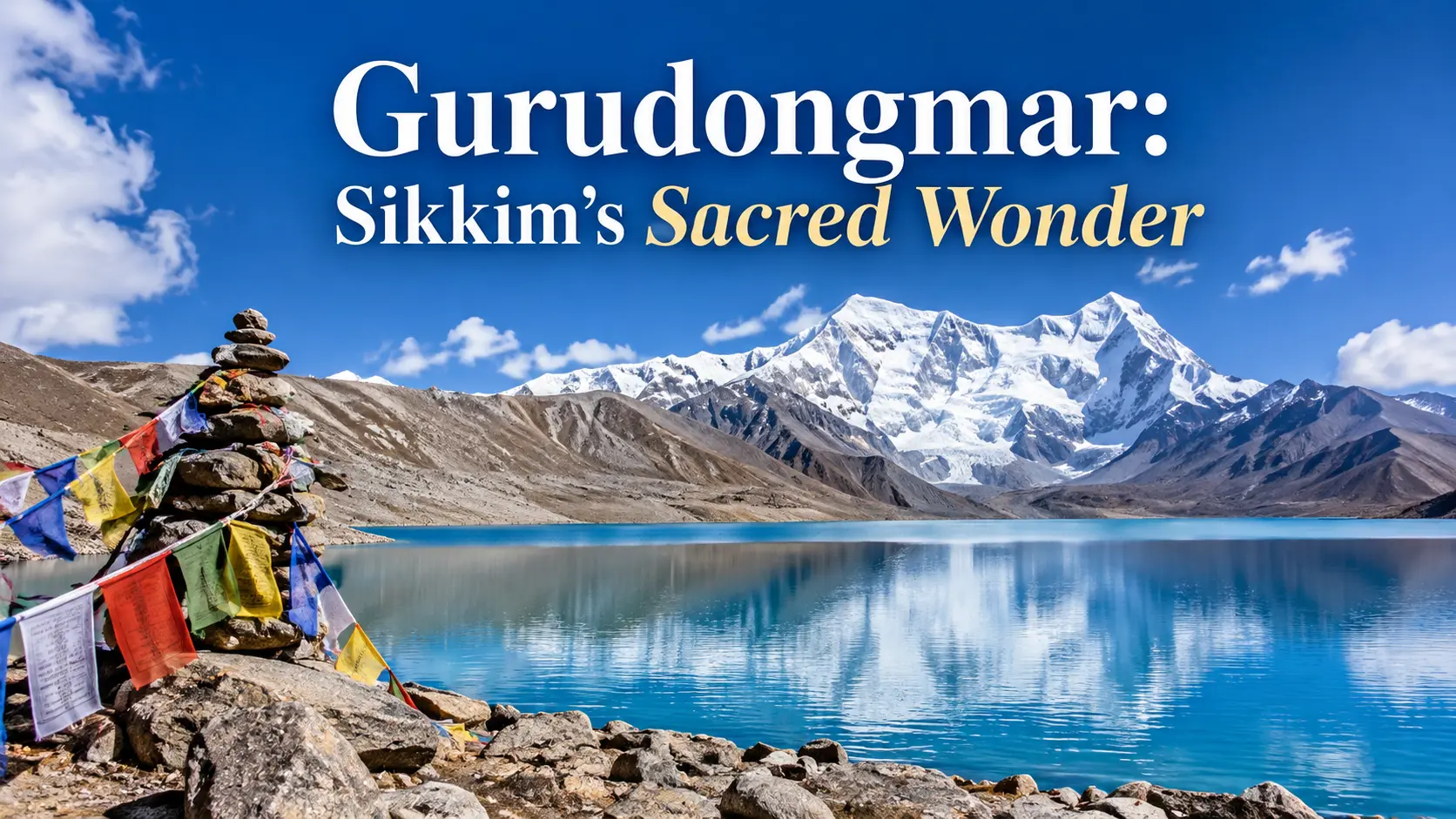
One such place is the Gurudongmar Lake in Sikkim, which gives you the feel of a different world. Nestled in the mountains of North Sikkim, this tranquil blue lake is one of the most famous high-altitude lakes in India. The air is thin, the wind is cold, the silence is real. Many a traveler comes here with weary eyes but leaves with a full heart.
But this lake is more than simple beauty. It is holy for people of different religions, and historical stories tell how it gained its name. In this blog, we will discuss its history, some fascinating facts, how the lake looks in different months, the trip from Gangtok, and a few surrounding locations to visit. Let's start this journey together.
Gurudongmar Lake History: How Did This Sacred Himalayan Lake Get Its Name?
Like every interesting place, Gurudongmar Lake has a story to tell, and the story is as interesting. This holy lake in North Sikkim is more than just a pretty water body in the Himalayas. It is a sacred space for local people where faith meets the environment. Even the lake's name is associated with a famous teacher. Let's see how Gurudongmar Lake, Sikkim, got its name and why these old stories are shared with so much love.
Guru Padmasambhava and Guru Nanak: What Does the Legend Say?
The name Gurudongmar is strongly related to Guru Padmasambhava, popularly known as Guru Rinpoche, who is said to have brought Buddhism to this region of the Himalayas. Locally, it is believed that Guru Padmasambhava passed through this area on his way back from Tibet and blessed the lake, so the lake is still considered sacred. The exact meaning of the name varies somewhat from one account to another, but the word "Guru" points directly to him.
The other story is about Guru Nanak, the founder of Sikhism. According to Sikh tradition, he traveled through this area on his return from Tibet. At that time, the local people were in a major crisis. The lake was frozen, and there was little drinking water. Guru Nanak touched the ice, and part of the lake turned into clear, running water. Both traditions say a part of the lake never freezes, even in the coldest months.
Because of these two stories, Gurudongmar Lake is one of the few places where Buddhists and Sikhs gather together to worship. Many travelers sense it the instant they set foot on land. The thin air, the bitter wind, and the deep solitude make the old legends feel real, as if they happened only yesterday.
So now that we’ve put the old legends behind us, let’s look at why this lake is so famous and what key facts make it unique.
Why Is Gurudongmar Lake So Famous? Significance and Key Facts
Gurudongmar Lake is known for combining height, faith, and natural beauty in one place. Gurudongmar Lake, Sikkim, is tucked deep inside North Sikkim, close to the Tibet border where the country turns chilly, stark, and wide open. Pilgrims come to pray, travelers come for the blue water against snow peaks, and many come only to brag that they stood this high. Add the old stories, and the importance of this lake is easy to understand. Here are the major things that set it apart from all the other lakes in the region.
Is Gurudongmar One of the Highest High Altitude Lakes in India?
Yes, Gurudongmar is one of the highest altitude lakes in India. The Government of Sikkim says it is at an elevation of about 17,800 ft (5,430 m) above sea level. The air is much thinner at this level, and this is why the lake feels so quiet and so isolated from daily life. Here’s how it compares with some of the other famous lakes in India.
| Lake | Region | Approx. Altitude |
|---|---|---|
| Gurudongmar Lake | North Sikkim | 5,430 m (17,800 ft) |
| Tso Lhamo Lake | North Sikkim | 5,100–5,330 m (restricted area) |
| Tso Moriri | Ladakh | 4,522 m |
| Pangong Tso | Ladakh | 4,350 m |
| Chandratal | Himachal Pradesh | 4,300 m |
| Tsomgo Lake | East Sikkim | 3,780 m |
Nearby, Lake Tso Lhamo is another lake commonly named India's highest, although it is a restricted area and access is prohibited. This makes Gurudongmar the highest-altitude lake most travelers can actually get to. Besides its height, three other facts contribute to its fame:
- Home of Teesta: The lake is nourished by glaciers, and one of its streams joins the Tso Lhamo, the source of the Teesta River. This river is the lifeline of Sikkim and North Bengal.
- Near the border of Tibet: The lake is only around 5 km from the border, and army checkpoints flank the route.
- A shared pilgrimage site: Buddhists, Sikhs, and Hindus all visit, and prayer flags fly along the shore.
Facts only tell half the story, so let's look at how this lake changes from October to May.
Gurudongmar Lake in October, November, December and May: What Changes Month by Month?
Gurudongmar Lake looks like four different places in October, November, December, and May. That's the enchantment of high-altitude lakes in India, where the mood changes with every season. In October, the lake is a deep blue; in December, it is white and calm; and by May, the ice begins to crack slowly. So, what actually changes month to month at Gurudongmar Lake, Sikkim? The color of the lake water, the clarity of the sky, the snow on the hills, and even the temperament of the road all alter. Let's go through each month and see which one works.
Which Month Gives the Bluest Water and Clearest Views of the Lake?
October and November are the greatest months for bluest water and clearest sights. Here is a basic summary, month-wise.
- October and November: The rain has ended, the sky is clear and cold, and the mountain tops are sharp above the lake. The best time to visit Gurudongmar Lake for photography is October. Deep blue water and prayer flags in gentle morning light. Gurudongmar Lake in November is equally clear, but the cold bites deeper, and thin ice may start to form around the edges.
- December: In December, Gurudongmar Lake becomes a peaceful white wonderland, with ice and snow covering the coast. It has none of the blue of autumn.
- May: In May, the ice begins to melt. The ice breaks up, patches of snow lie next to open blue water, and it produces a nice mix. The wind is still strong, and the weather can go gloomy by noon, so mornings are the safest time to visit.
"It's different every year, because the lake looks different on the day, depending on snowfall and cold. It is best for beautiful blue water and sharp mountain vistas in October and November. People who want a mix of snow and water should go in May, while those who enjoy a frozen, silent landscape should go in December.
With the best month in mind, let's look at the road from Gangtok and how a standard tour runs.
Gangtok to Gurudongmar Lake: How Far Is It and What Does a Typical Tour Look Like?
The drive from Gangtok to Gurudongmar Lake is among the longest and most rewarding road rides in Sikkim. The lake is over 190 km from the capital, and every kilometer changes the view. The green valleys turn into rocky slopes and finally into a cold, dead plateau that looks like it's from another planet. So, you never do a trip to Gurudongmar Lake in one go. Most people break the route into two legs, staying overnight at the mountain village of Lachen. Only Indian nationals can visit the lake, and a Protected Area Permit arranged through a registered operator is required, so confirm the latest rules before you book.For a simple Gurudongmar Lake trip, start early, walk at a comfortable pace, and be patient. It is good to be aware of the route before you go.
Is There a Gurudongmar Lake Trek, or Is It a Drive-Up Lake?
This is where many first-timers are in for a shock. The lake itself is not a long hike. Gurudongmar is a drive-up lake, and a sturdy car takes you almost to the water's edge. Those looking for that Himalayan adventure feel are usually after Gurudongmar Lake, and the tough high road delivers it without a single day of walking. Only short walks along the shore.
Times and distances to nearby places are:
- Gangtok to Lachen: About 125 km, which takes around 6 to 7 hours with tea and photo breaks.
- Lachen to Gurudongmar Lake: About 67 km, normally 3 to 4 hours one way as the road is difficult and climbs fast.
- Lachen as base: Lachen is the closest village and the most common overnight stop for Gurudongmar Lake, so visits to the lake are usually from here.
Lachung to Gurudongmar Lake is also possible, but it adds roughly three more hours on the road, making it a much longer day. Hence, most Gurudongmar Lake itineraries stay in Lachen first and then proceed to Lachung.
The trip is planned; let’s check what else is there in North Sikkim around the lake.
Places to Visit in North Sikkim Near Gurudongmar Lake: What Else Is Nearby?
There's more to North Sikkim near Gurudongmar Lake than just stunning views. Many of them tell stories that lead back to the lake itself and add a deeper resonance to a visit than a typical tourist circuit. Some of the best tourist destinations in North Sikkim are right on the route - humble prayer halls, serene river bends, and mountain villages. So what else is out there, and what old myths is the lake linked to? Sightseeing in North Sikkim is so interesting because of the religious places and old views. Let's have a look.
Which Faith Sites and Viewpoints Make the Best North Sikkim Sightseeing Places?
Chungthang is where the Lachen Chu and Lachung Chu rivers converge to form the Teesta. Here is Gurdwara Nanak Lama Sahib, a peaceful shrine associated with Guru Nanak's travels in this area. Nearby is a large rock said to bear footprints, and a tree next to it said to have grown from the Guru's walking stick. The same rock is also associated with Guru Padmasambhava in Buddhist doctrine, making it a holy site for followers of both religions. For many pilgrims of North Sikkim, it is a must-see tourist place.
Back at the lake, the shore is lined with colorful prayer flags, knotted by people making a silent wish. These North Sikkim trip sites suit well on the same route for scenic breaks:
- Seven Sisters Waterfall: An uplifting roadside stop on the way to the north.
- Singhik viewpoint: On bright mornings, you can see Kanchenjunga here.
- Chungthang riverside: Two rivers meet in a flow of blue-green water.
The journey makes these two mountain communities feel even more special. In Lachung, you can visit Yumthang Valley and the village monastery. In Lachen, the places to visit stay closer to the lake road, with quiet streets and a small gompa.
Having seen the lake and its neighbors, let's round things off and see why the long journey is so rewarding.
Gurudongmar Lake Sikkim: Is the Long Journey Rewarding? Final Verdict
The journey is long or demanding. The air is thin. It's a long trip. And the morning begins before the sun comes up. But the moment the blue water hits the snow, all tiredness evaporates. Add in the old traditions of Guru Padmasambhava and Guru Nanak, the majesty of the glacier and the calm in the air, and the lengthy travel seems well worth it. For mountain lovers, it is the best place to visit in North Sikkim, a memory that lasts for years.
But if you prepare correctly, it will be a smooth holiday. The difference on these roadways is the correct month, a reliable driver, and a well-paced route. Picovoyage's North Sikkim Packages take care of the road, accommodation, and schedule so that passengers can enjoy the beauty. Pick a North Sikkim tour package that fits your dates, and let the Himalayas take care of the rest.
Frequently Asked Questions
Why is it called Gurudongmar Lake?
Local belief links the name to Guru Padmasambhava, also known as Guru Rinpoche, who is said to have blessed the lake. A second tradition ties it to Guru Nanak, who reportedly visited on his way back from Tibet in the early 1500s.
Which religions consider Gurudongmar Lake sacred?
Buddhists, Sikhs and Hindus all hold it holy. Pilgrims visit to pray, and colourful prayer flags line the shore.
Is Tso Lhamo Lake higher than Gurudongmar, and can tourists visit it?
Tso Lhamo is also often called India's highest lake. It is a restricted area with limited access, so Gurudongmar is the high-altitude lake most travellers can actually reach.
Which river does Gurudongmar Lake feed?
The lake is glacier-fed, and one of its streams joins Tso Lhamo, which gives rise to the Teesta River. The Teesta supports Sikkim and North Bengal.
How far is Gurudongmar Lake from Gangtok?
It is about 190 km from Gangtok. The first leg, Gangtok to Lachen, is around 125 km and takes 6 to 7 hours. Lachen to the lake is roughly 66 km and takes 3 to 4 hours one way.
Is there a trek to reach Gurudongmar Lake?
No long trek is needed. It is a drive-up lake, and a sturdy vehicle takes travellers almost to the water's edge. Only short walks along the shore are required.
Which month shows the bluest water at Gurudongmar Lake?
October and November. The rains are over, the sky is crisp and the snow peaks look sharp behind the deep blue water.
Can Gurudongmar Lake be visited in May?
Yes. In May the ice starts to melt, so patches of snow sit beside open blue water. The wind stays strong and clouds often build by noon, so mornings are best.
Can Gurudongmar Lake be done in one day from Lachung?
It is possible, but the drive adds roughly three more hours, which makes for a very long day. Most travellers stay in Lachen first and move on to Lachung later.
What other places can be visited near Gurudongmar Lake?
Good options on the same route include Gurdwara Nanak Lama Sahib at Chungthang, Seven Sisters Waterfall and the Singhik viewpoint. The mountain villages of Lachen and Lachung also make easy additions.
Related Tour Packages
Sikkim Darjeeling Tour Package – 10 Nights 11 Days
- Hotel Stay
- Sightseeing
- Cab Transfer
- Meals
Sikkim Darjeeling Tour Package – 6 Nights 7 Days
- Hotel Stay
- Sightseeing
- Cab Transfer
- Meals